Serkan Oral on coffee, art and slowing down in Dubai
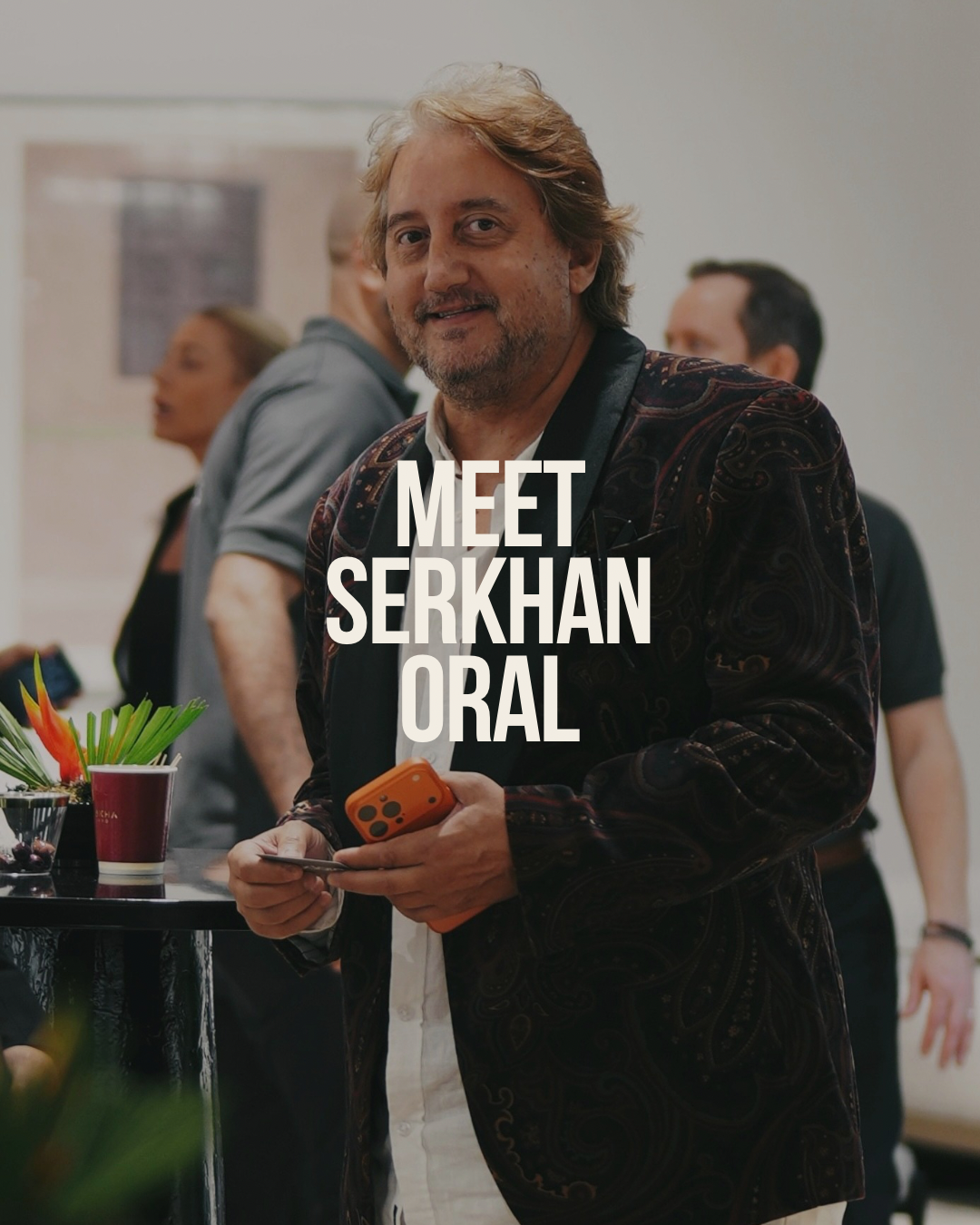
Serkan Oral can’t look at a cup of coffee or a painting without asking what it went through to get to him.
We’ve been spotting Serkan at coffee events around Dubai for a while now, most often at Mokha 1450. He’s always deep in conversation, cup in hand. It felt right to sit down with him and ask about his journey, and how coffee fits into his life.
He started out as a journalist, reporting from places where history was close to being lost. Today he is a member of the Specialty Coffee Association (SCA) and the International Council of Museums (ICOM), so he spends his time around two things that ask you to slow down. Here’s our conversation, from Turkish coffee to Dubai’s coffee scene.
Where did your love for coffee begin?
Not in a café. It was on assignment in the Ethiopian highlands, watching farmers sort cherries by hand, slowly and carefully. That’s when I understood that coffee, done properly, is closer to a ritual than a drink.
Years later, reading about the Indian tradition of chai wallahs, the way a simple roadside vendor can turn the pouring of tea into something almost ceremonial, lifting the cup high to aerate it, a small daily theatre, I understood that this instinct is not unique to any one culture. Wherever people slow down for a hot cup, they are practising the same quiet devotion.
What was the first specialty cup that made you stop?
A Moka pot, the traditional Italian way. It was invented by Alfonso Bialetti in 1933 and has become one of the most enduring symbols of Italian coffee culture. That iconic octagonal pot, aluminum or steel, sits over a gas flame and brews by steam pressure, producing a strong, full-bodied, authentic Italian coffee. I was a trainee espresso maker back then.
What does a normal morning look like at home?
Around 11am my body tells me it’s time. After breakfast, I make Turkish coffee in a cezve over low heat, because it’s a ritual. After 12pm, if I have time, I make a V60 with freshly ground coffee. No rush.
Where does Turkish coffee fit in for you?
Close to my heart, and close to the source. People forget that the coffee bean itself first travelled north out of Yemen, through the port of Mocha, before it ever reached a Turkish ibrik. So in a sense, every fincan of Turkish coffee is a small tribute to that original Yemeni soil.
What the Ottomans did with it afterward was turn brewing into ceremony. The bride to be preparing coffee for her future in laws, sometimes slipping salt into the groom’s cup instead of sugar to test his patience and humour. The kahvealtı rituals in the palace, where rank and etiquette were read as carefully as the grounds themselves. The fortune telling in the overturned cup afterward, where the thickened residue becomes a kind of private oracle.
None of this is about caffeine. It is about hospitality slowed down into meaning, not unlike the chai wallah’s lifted pour, only with a silence at the end instead of a song.
Turkish coffee does not ask to be finished quickly. It asks to be sat with, until the cup itself has something to say.
How do you tell good Turkish coffee from bad?
Only the foam tells the truth. Cold water, slow fire, and you cook it until the foam rises. A good one has a thick, velvety köpük that stays put, a very fine grind that settles into soft sludge, and no burnt edge. A bad one is boiled hard, has no foam, feels gritty and tastes scorched.
Should specialty and Turkish coffee learn from each other?
Yes. Specialty can learn the hospitality and patience of Turkish coffee. Turkish coffee can learn from specialty’s care about origin, freshness and roast. The method stays traditional, but the beans can get better.
What do people misunderstand about where coffee comes from?
They think coffee is a product. It’s a harvest. Behind every cup is a season, the weather, and hands picking cherry by cherry. Farmers rarely see what a cup sells for.
Most commercial coffee is a blend of several origins. Specialty is usually single origin, so you can truly taste what coffee from one region, one farm and one terroir is like. Try a single origin and you’ll start to understand.
What’s overrated in specialty coffee?
Obsessing over tasting notes and scores. Whether it’s “blueberry and dark chocolate” or “orange and milk chocolate” matters less when you enjoy it.
What would you recommend for someone new to Dubai?
Three cups, and one you can’t skip.
First, an affogato, espresso poured over vanilla ice cream. Second, a V60 with Yemeni beans, served with fresh dates. Third, a Turkish coffee with a glass of cold water and a slice of tiramisu.
The one you can’t skip is Arabic qahwa with fresh dates. You get the flavor and the culture together.
What’s a coffee you still think about?
Two new tastes for me. First, menengiç, a hot drink made from roasted terebinth fruit, a wild cousin of the pistachio. It has no caffeine. Second, milk dibek, a Turkish coffee ground by hand in a big stone mortar called a dibek.
What has ICOM taught you that journalism didn’t?
Journalism taught me to chase the moment. ICOM taught me to protect it afterwards. I’ve reported from conflict zones where centuries of heritage were one shell away from disappearing, so I never take a preserved fresco or manuscript for granted.
Has a piece of art ever changed how you see things?
Yes, touching the Taj Mahal, for example, the world’s number one love temple. Located in Agra, India, the iconic Taj Mahal is an ivory white marble mausoleum commissioned by the Mughal Emperor Shah Jahan. Built as a breathtaking symbol of eternal love for his favorite wife, Mumtaz Mahal, it remains one of the world’s most renowned architectural wonders.
A visit to the cave paintings at Ajanta stayed with me for years too. It wasn’t the size of them. It was that nobody signed anything. Generations of hands adding to one work over centuries. Now when I walk through a gallery in Dubai, I don’t ask who made this. I ask what it survived to reach me.
“The truest art was rarely made to be remembered. It was made to be true, and remembering followed on its own.”
What do you make of Dubai?
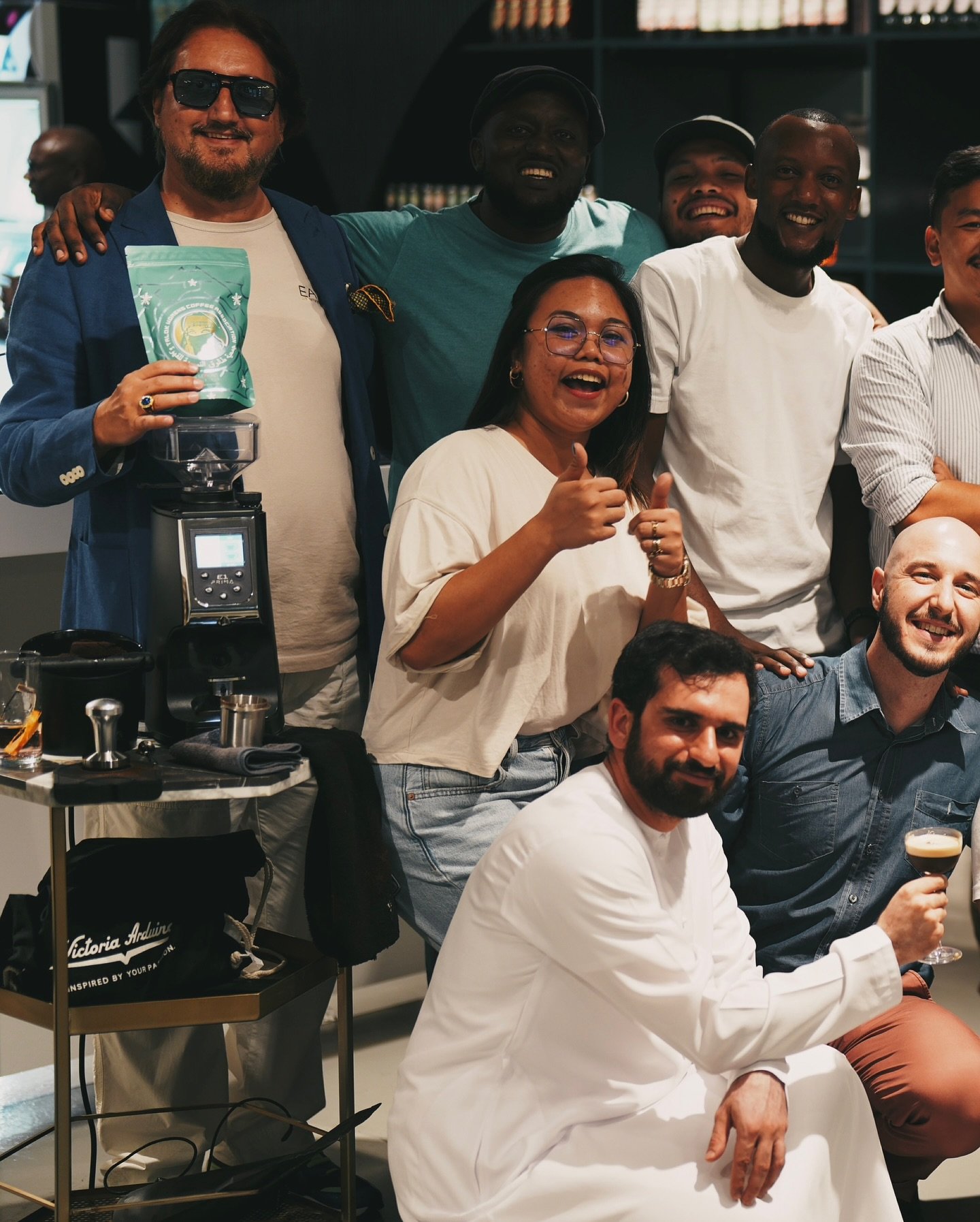
It surprised me by refusing to be merely luxurious about it. Beneath the glass towers there is a serious, searching coffee culture. Yemeni beans brewed by siphon in an Al Quoz warehouse or Al Wasl Coffee Bar, Jamaican or Ethiopian pour overs served with the gravity of a small sermon. A city where the whole world sits at the same table will always want the real thing over the merely polished.
It has stopped being a destination and become a reference point. In specialty coffee, it holds its own against New York and Doha. In art, it is building something in real dialogue with London and Mumbai. What makes it unusual is not the competition but the synthesis: Orient and Occident, discipline and indulgence, all poured into the same cup, hung on the same wall.
Last one. What do a cup of coffee and a work of art tell you together?
That respect can show up in unlikely places. A latte art swirl and a carving on a temple wall are the same gesture. Someone decided this ordinary moment deserved to be made beautiful. Dubai gives that instinct a stage.
Want to talk to Serkan? Whether it’s coffee, museums or the stories behind both, he’d love to hear from you. Reach him on Instagram.