The Most Thorough Matcha Class I've Sat Through (And Why You Should Book Mark Mwangi)

I've been in a lot of coffee cuppings, attended lectures and classes on many topics about coffee and was also taught about brewing by many baristas, but this was the first time I'd sat through something that has completely reset my understanding of matcha. A matcha masterclass by Mark Mwangi, and I walked out of it feeling the same way I did the first time someone explained why my pour over technique was ruining a good coffee.
Mark Mwangi is well known in the community, best recognized for his exceptional matcha drinks and his knowledge in the craft. He is the lead consultant behind Mihbash in Jumeirah, one of the more successful café openings in recent memory, and he is also the regional ambassador for AIYA. You can already see him channelling what he has learned from his journey into mentoring his own staff to now introducing which I think is the most thorough matcha masterclass that you can take.
What makes this stand out isn't just that he knows his matcha. It's how deep he took the room, and how little of it felt like a sales pitch dressed up as education.
He started from the actual root of it
Most people don't even know what matcha actually is. Many of them think they're drinking matcha when really it's just green tea ground into powder.
Mark went back to where it all began. Matcha didn't start in Japan. It started in China, over a thousand years ago, when tea leaves were steamed and pressed into cakes, then ground into powder. Centuries later, the Chinese started whisking that powder into foam, which is the closest thing to what we now call matcha today.
Japan only entered the picture around 1191, when a monk named Eisai brought the seeds and the method back from China. At the time, tea was treated as medicine, not a drink.
The real turning point came later, when Japanese farmers started shading the tea plants before harvest. That one shift, shade growing, is what actually created matcha as we know it. China gave the world powdered tea. Japan gave it the shade, the stone milling, and the ritual around it. That's what turned it into matcha.
What actually separates matcha from green tea powder
This is the part that stuck with me most, because it's the part most cafes get wrong or don't bother explaining. Mark broke it down to four things. The plant has to be shaded two to three weeks before harvest, which pushes up chlorophyll and L-theanine bringing down the bitterness from a type of antioxidants known as catechins.
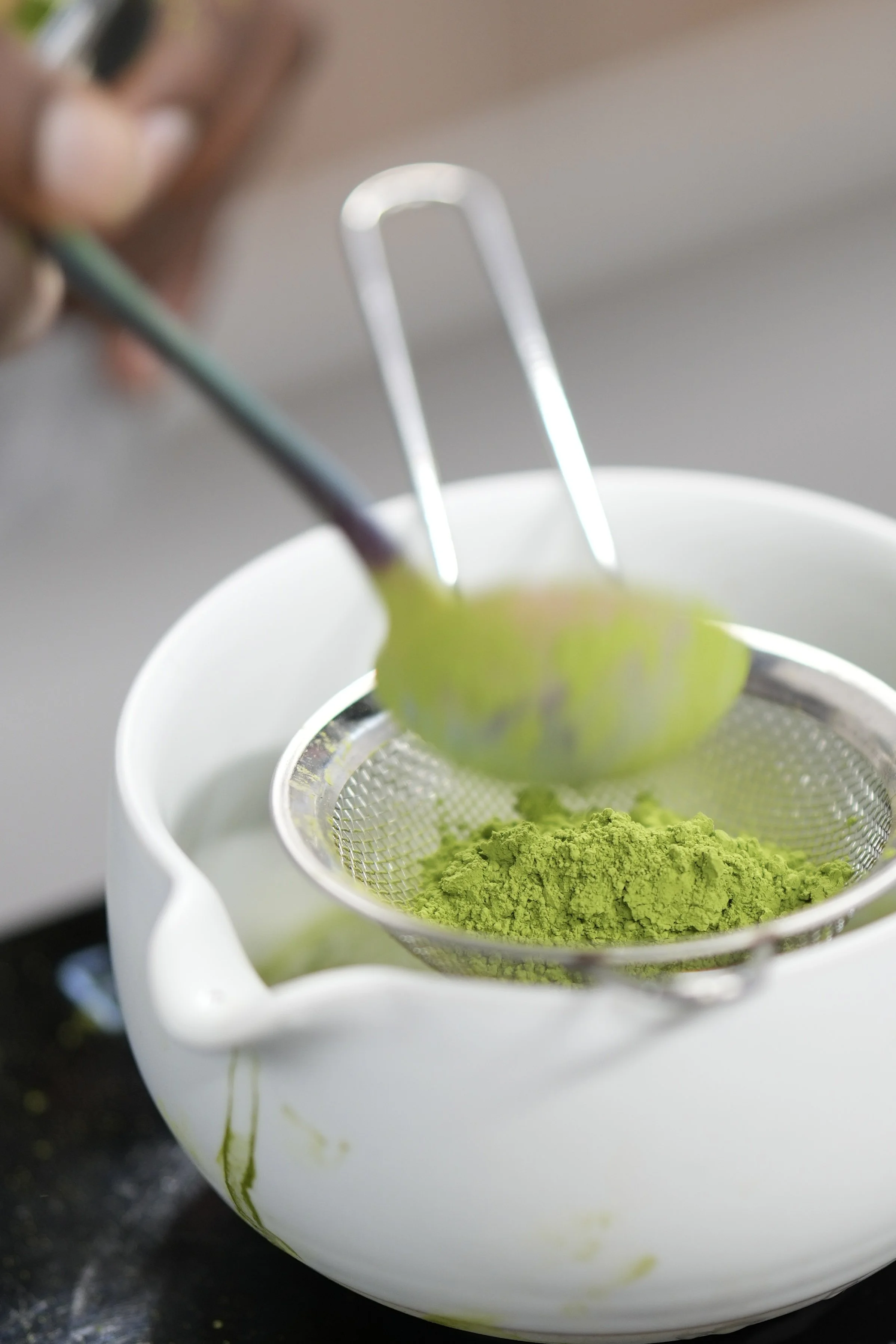
Only the shaded, de-stemmed, de-veined leaf, called tencha, qualifies, and the earliest pickings of that leaf carry noticeably more L-theanine than anything picked later. It has to be stone ground on granite mills turning slow, into an ultra fine powder, the kind that shouldn't feel gritty when it's properly prepared. And unlike tea, you're drinking the whole leaf suspended in water, not an infusion, so everything in that leaf ends up in your cup.
Shade up, bitterness down, is the whole engine behind why a good bowl tastes sweet and smooth instead of grassy and harsh. Once you know that, you actually notice the difference in taste.
He reminded that we need to treat terroir and cultivar in matcha the way we treat it in coffee
This is where the class really won me over, because Mark drew the same map we draw for coffee, but for matcha instead.
Matcha Mapping
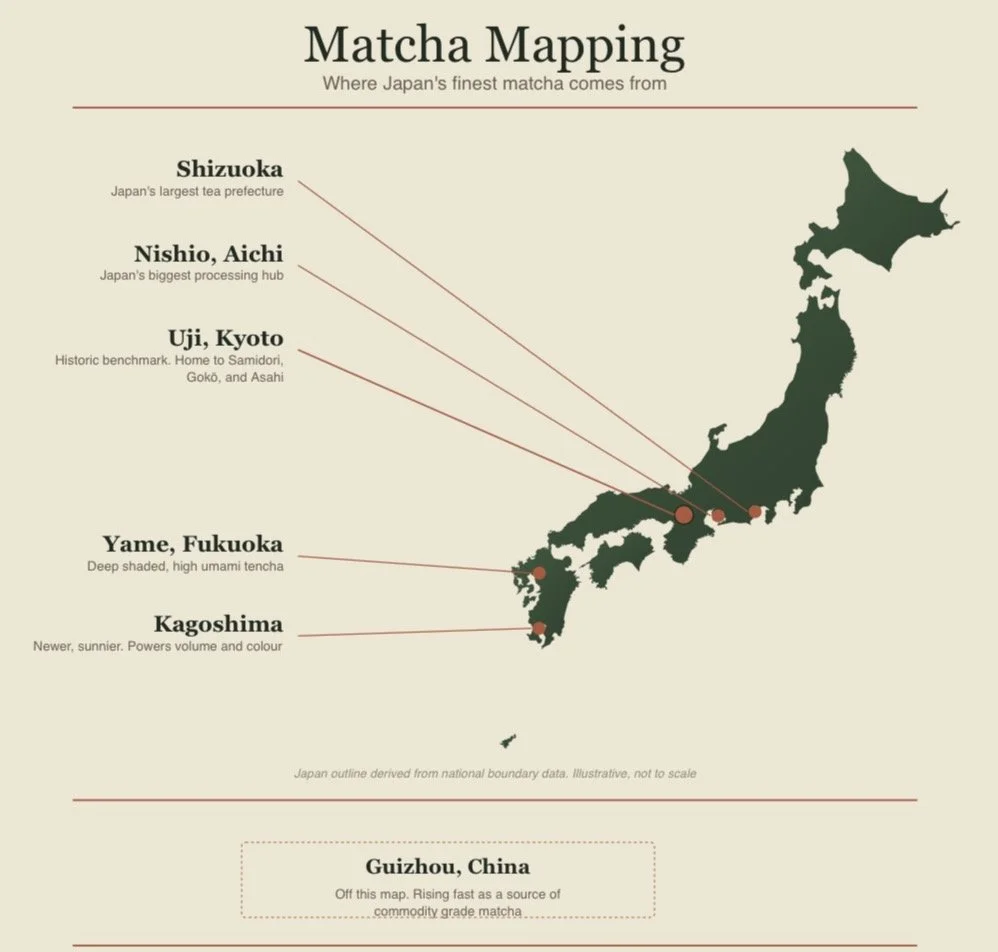
Uji in Kyoto is the historic benchmark, home to prized cultivars like Samidori, Gokō and Asahi.
Nishio in Aichi is Japan's biggest processing hub.
Yame in Fukuoka is known for deep shaded, high umami tencha.
Kagoshima is the newer, sunnier region powering volume and consistent colour.
Shizuoka is the country's largest tea prefecture.
Guizhou in China is now rising fast as a source of commodity grade matcha for cafes, even though shaded, stone milled Japanese tencha stays the actual quality benchmark.
Cultivar Mapping
Mark went cultivar by cultivar, the way we'd talk about Gesha versus Bourbon.
Asahi, rare and almost bitterness free.
Gokō, deep umami and floral, used in competition.
Samidori, the classic balanced Uji cultivar.
Okumidori, vivid colour with a nutty edge.
Saemidori, bright and approachable, a good base for lattes.
Uji Hikari, rare and reserved for top tier ceremonial pours.
Yabukita, Japan's dominant cultivar by a wide margin, because it holds up in milk and scales for volume.
I've never had anyone explain matcha to me the way a roaster explains a coffee lot. Mark did.
He taught us to actually taste and grade it, not just drink it
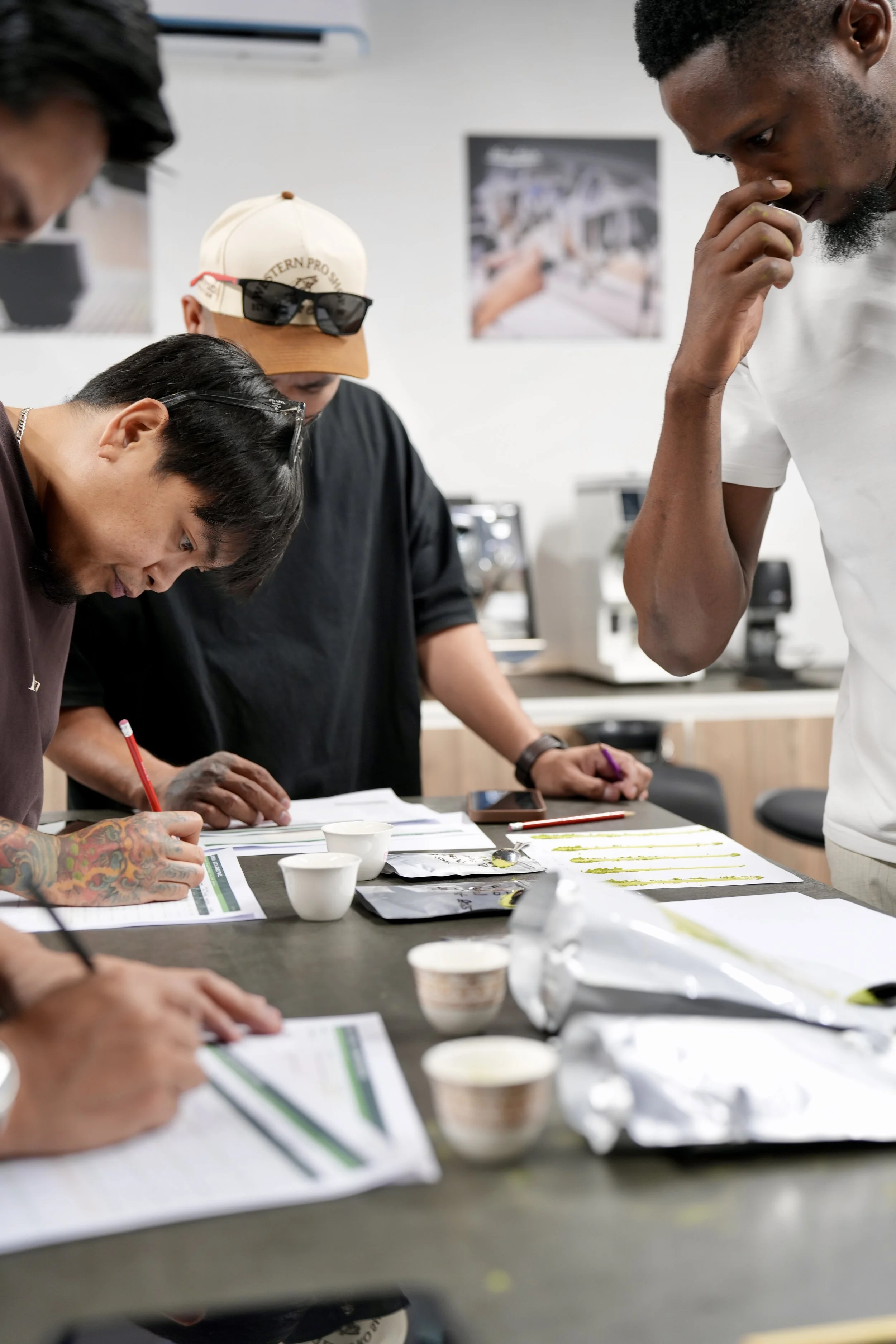
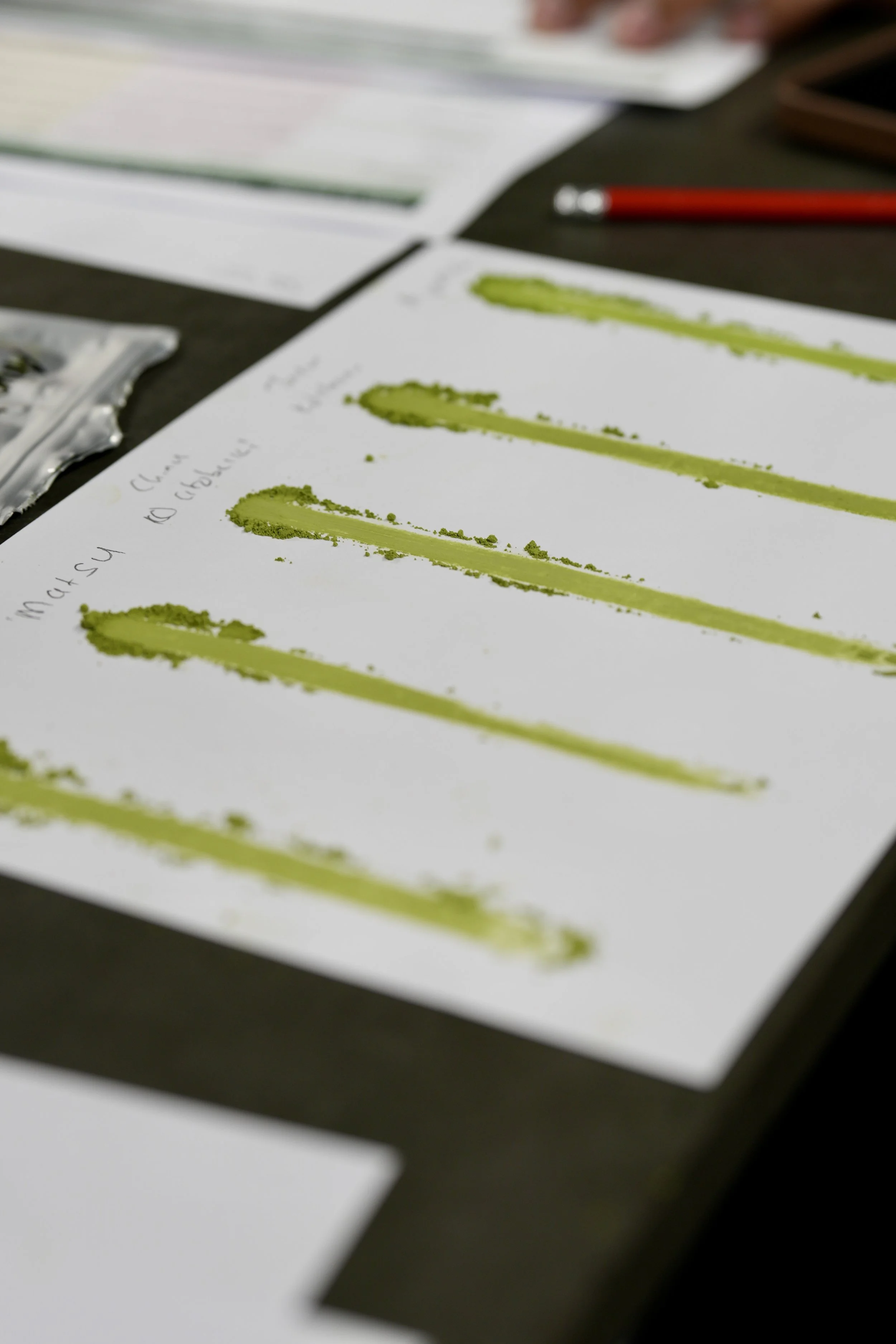
We didn't just sit and listen, we ran the tests. This was technical and practical, and none of these are lab tests on their own, they're the kind of comparative checks a trained taster runs to build a feel for quality.
The paper swipe, where you drag a pinch of powder across white paper and a fine, high grade matcha glides in one clean unbroken jade line.
The float and foam test, where the finest powders resist sinking and whisk up into a dense, creamy micro foam that holds for a few minutes before it starts to recede, a good side by side comparison rather than a pass or fail on its own.
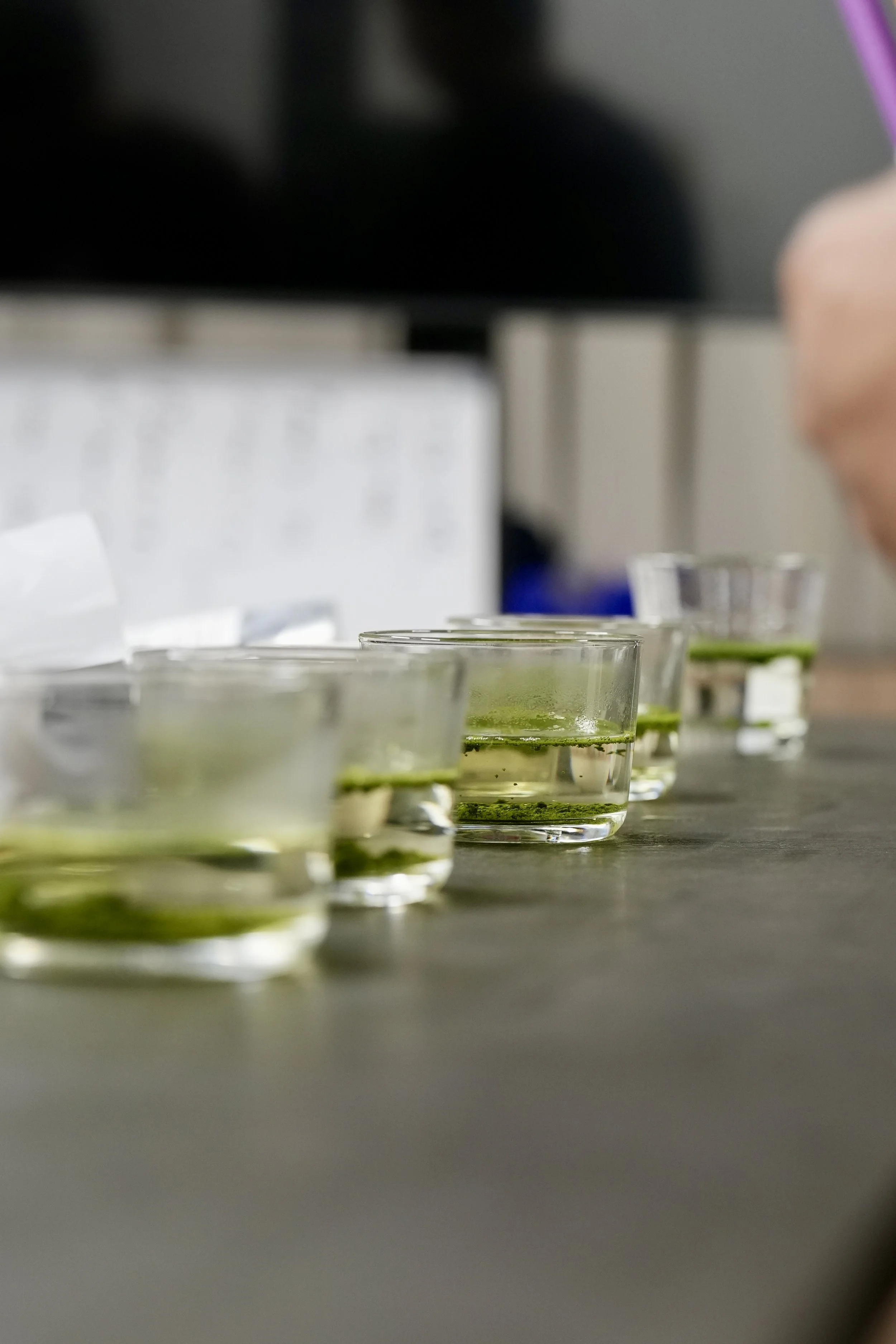
The settle test, twenty minutes in a bowl, where under the same prep conditions a good matcha settles slowly and keeps a green tint at the edge while a poor one drops fast and leaves a grey, dusty ring at the bottom.
He also showed us how easy it is to get fooled. Some matcha on the market is bulked up with artificial coloring to fake that vivid green, and colour alone won't tell you the truth, the real answers come from supplier documentation and proper lab testing. In a market that's getting more informed by the day, weak matcha doesn't stay hidden for long, it shows up in repeat business sooner or later. That's the exact same story I've seen play out in coffee shops that coasted on aesthetics instead of the cup.
He gave us an actual scorecard to assess matcha
This is the part that made it click for me that Mark isn't just repeating what he's read somewhere. He's built his own sensory scorecard for matcha, and it's laid out the way the SCA cupping form is laid out for coffee. Ten attributes, scored one to ten, that you can compare up to five samples side by side, not guessing.
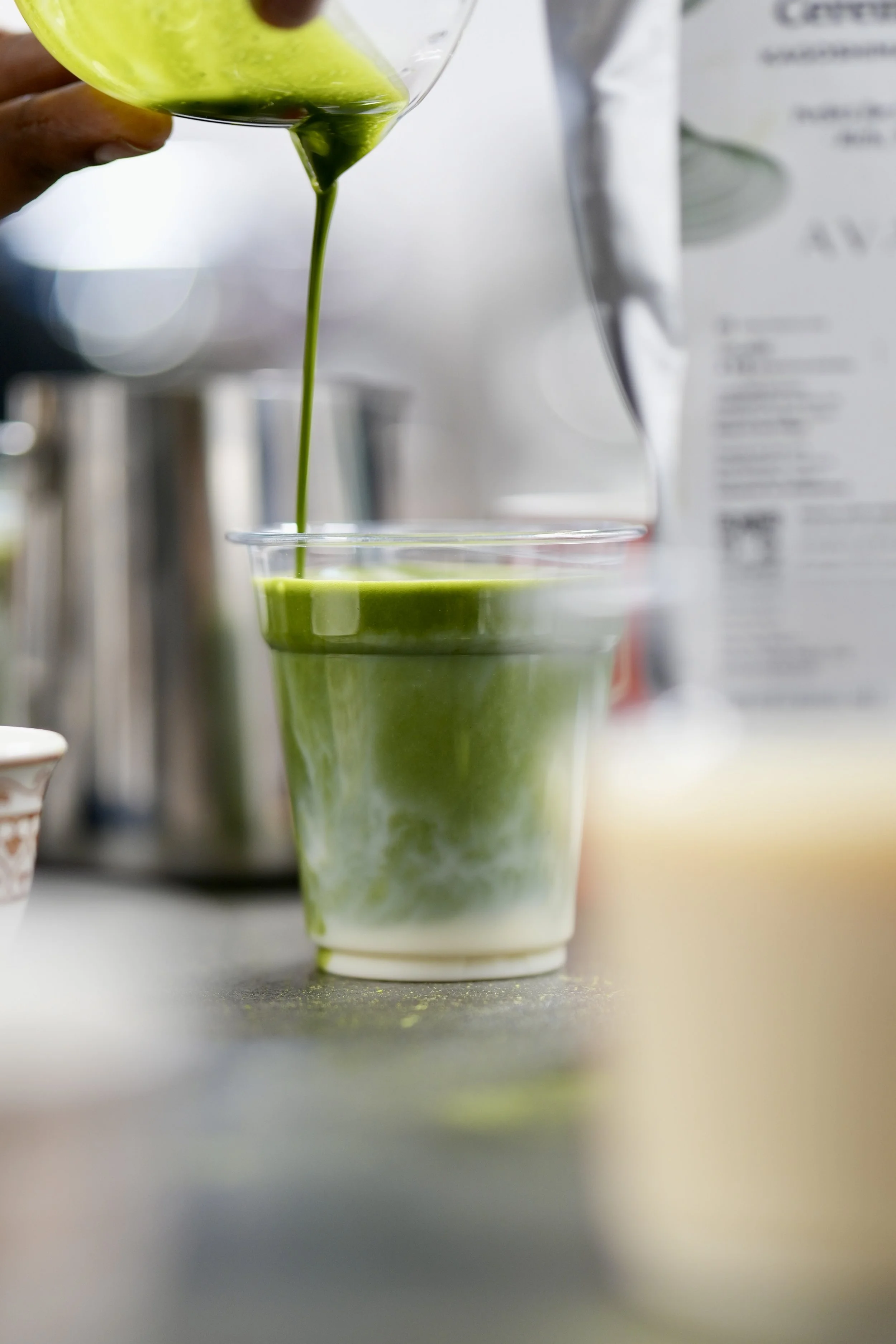
It goes well beyond color and taste. There's a test for how the matcha behaves in dairy milk, a separate test for coconut milk, and another for sweetened milk, because a matcha that holds up beautifully on its own can completely fall apart the moment it hits the wrong base, and a cafe needs to know that before it's on the menu, not after.
There's a rest test built in too, so you're not just judging the first sip, you're judging whether the bowl still looks and tastes right five minutes later. Every line has calibration anchors behind it, low, mid, high, so a room full of tasters can actually agree on what a "7" means instead of everyone scoring on gut feel.
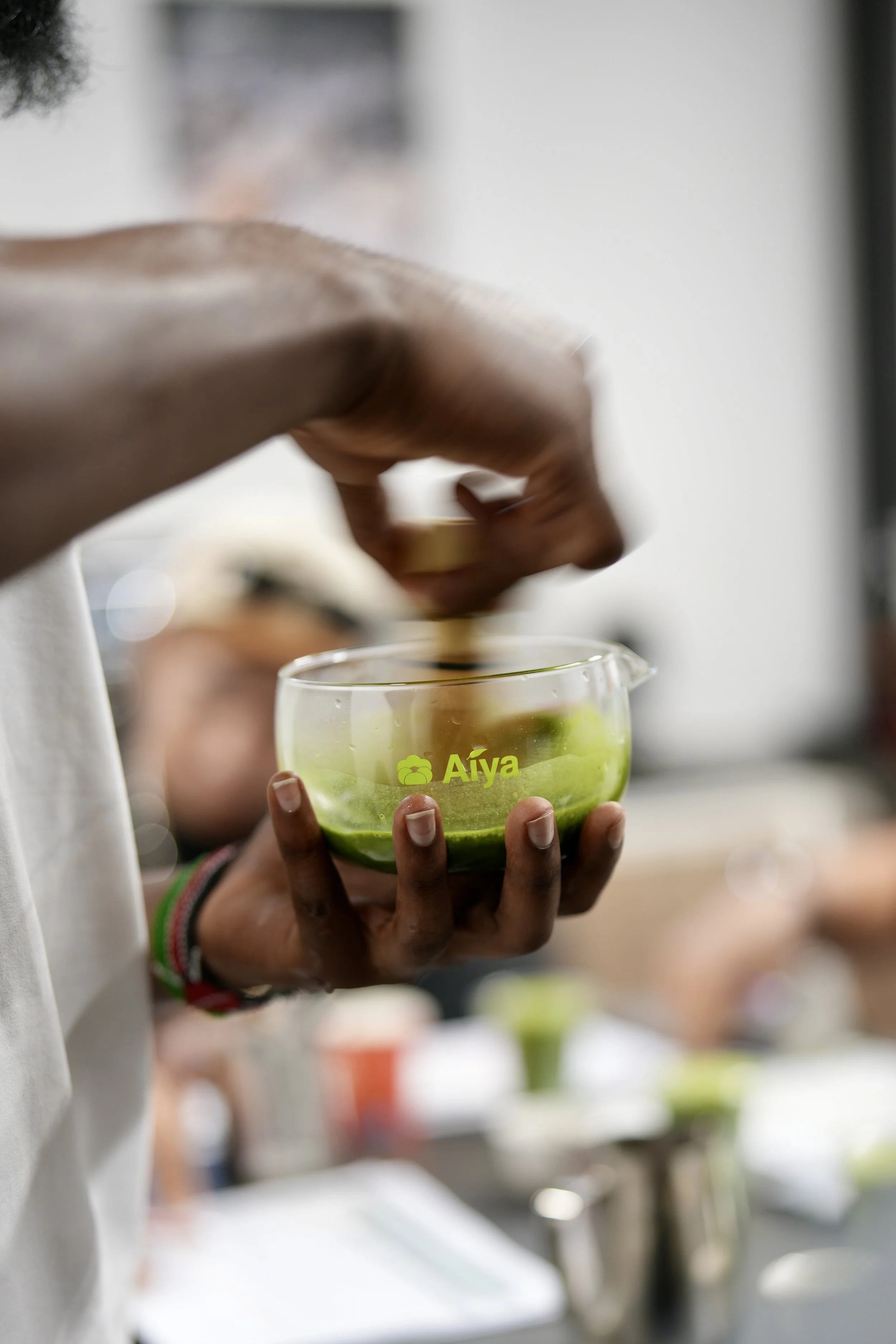
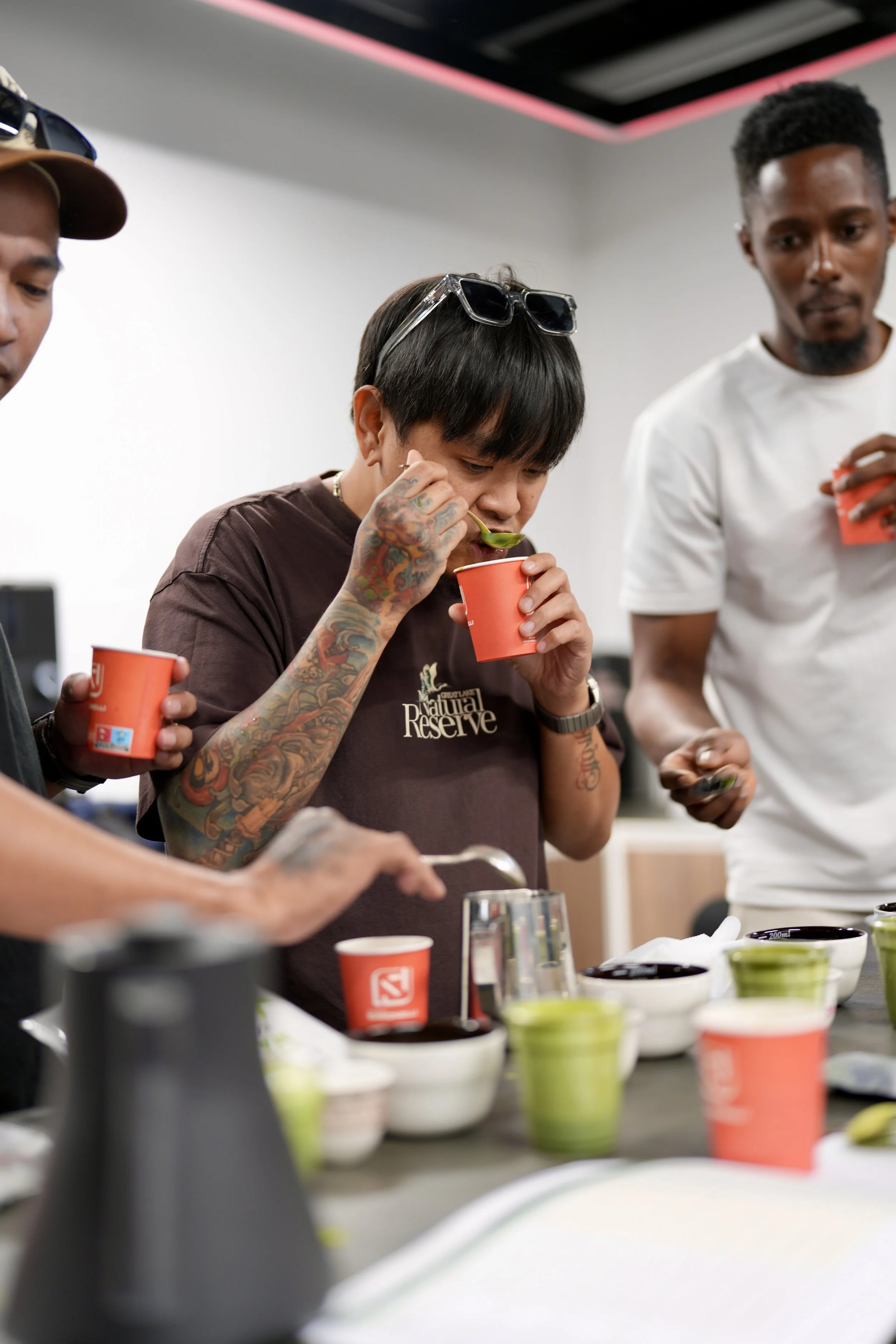
I'm not going to break down the exact anchors here. That's the part worth sitting in the room for, because watching him walk a panel through scoring multiple matcha samples side by side, and watching the scores actually converge by the end, is where the real learning happens. It's one thing to read that matcha should taste "smooth and umami-rich." It's another to score it against four other samples and defend your number to the person next to you. After all, everyone's palate is different, and getting calibrated to assess matcha like a professional matters, both for your business and for understanding your customer base.
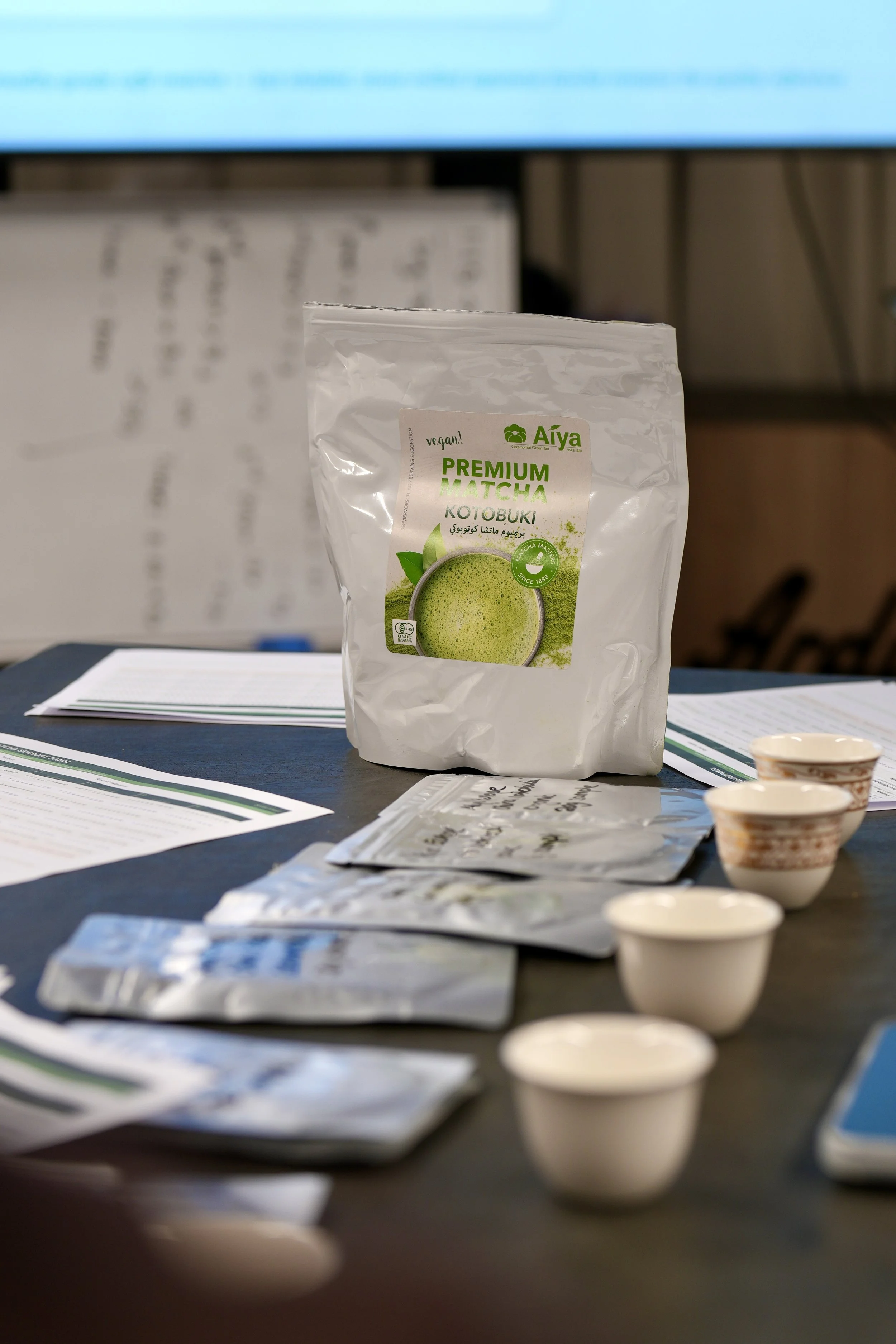
Some of the samples for the tasting exercises came from AIYA, a Japanese matcha producer that's been around since 1888 and still stone mills the way the traditional method calls for. Having a manufacturer like that behind the samples gave the class something to measure against, not just a story.
The market data cafe owners actually need
Matcha demand has climbed hard enough that prices are now the story. They are rising as much as 265% and Kyoto auction prices have surged on the back of low yields and global competition for supply. That's why prices at the top end keep climbing while quality at the bottom end keeps getting cut. Dubai sits right in the middle of this. The city has over 4,000 coffee shops and specialty cafes, and matcha has gone from trend item to permanent fixture on the menu since 2023. Iced matcha beverages are a major driver of that demand, mostly Gen Z looking for a photogenic, wellness led alternative to coffee.
If you run a cafe, a roastery, or anything client facing in this space, that's not trivia. That's your menu strategy for the next two years.
Why I'm telling you to go take this class
I run a coffee focused platform, so I don't say this lightly. In three hours, Mark covered the history, the botany, the terroir, the grading system cafes should use, how to taste and defend quality with your own hands, the whisking method, and the market forces shaping demand right now. I haven't seen anyone else in this region put it together this completely, and he built almost all of it through self study rather than sitting in someone else's classroom, which tells you something about how seriously he takes the subject.
If you're a barista, a cafe owner, a supplier, or you just want to stop guessing when you're handed a tin of matcha, this is the class to take. Get in touch with Mark for the next matcha masterclass.
Mark Mwangi is the regional ambassador for AIYA Matcha, who supported this masterclass. The observations and opinions above are my own.