Demystifying Coffee Fermentation
Ever spotted “washed,” “natural,” or “anaerobic” on a coffee bag and thought “cool… but what does that actually mean?”
Let’s unpack it without the lab coat, Latin names, or a PhD in biochemistry. The way coffee ferments is why two beans from the same farm can taste completely different.
Fermentation: The Flavor Maker
Fermentation sounds fancy, but it’s just tiny microbes mainly yeasts, and microbes snacking on sugars in the coffee cherry. As they munch, they create acids, alcohols, and aromatic compounds that shape flavor.
It’s the same invisible magic that gives sourdough its tang, kimchi its kick, and kombucha its fizz. And in coffee, it’s the step that turns an ordinary green bean into something vibrant, complex and bursting with character.
Who’s Doing the Work?
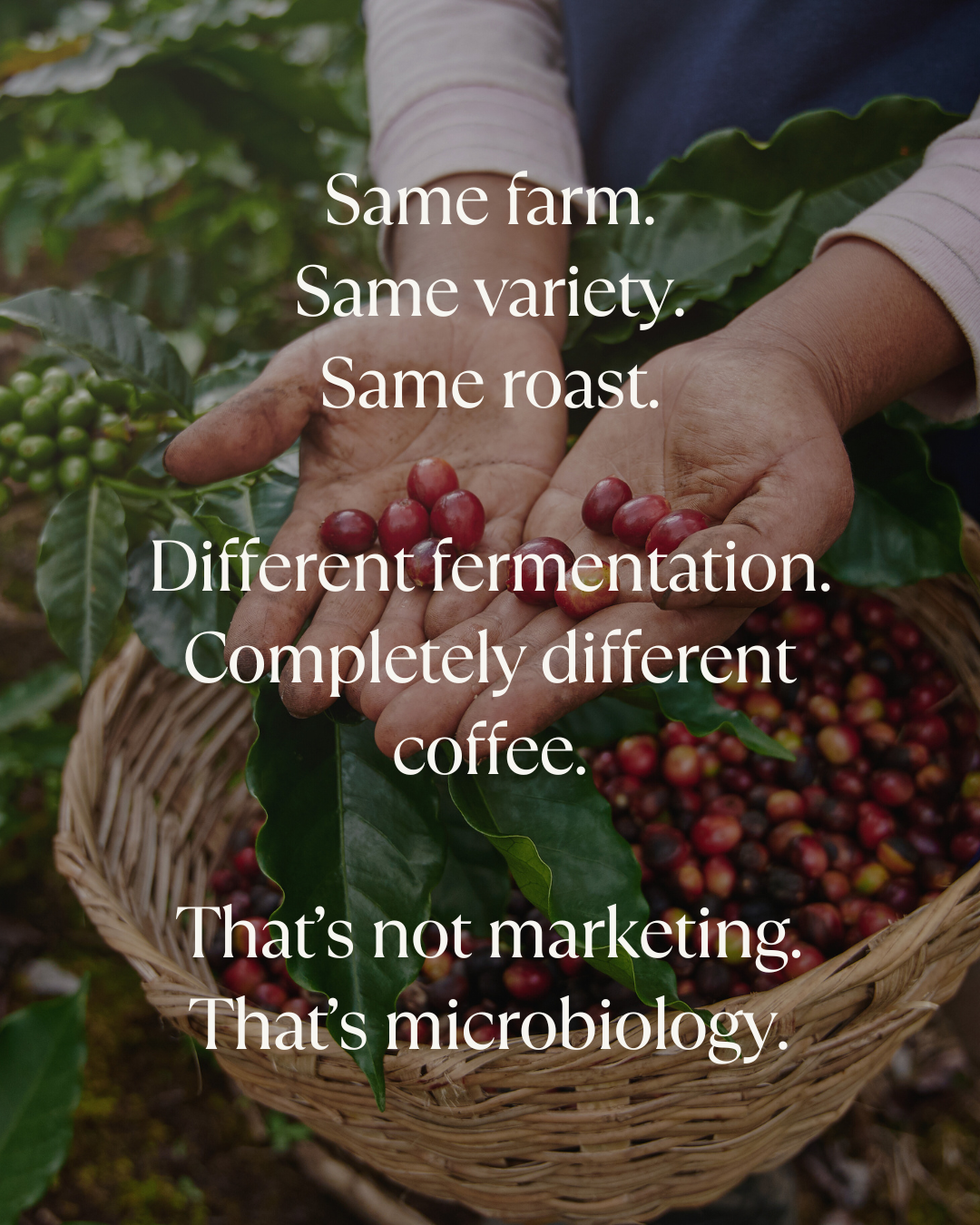
Tiny microbes such as yeasts and bacteria throw a flavor party in every coffee cherry. Each guest bringing in something unique:
Yeasts → Produce alcohols and esters that contribute fruity, floral, and sometimes wine-like characteristics.
Lactic Acid Bacteria → Generate lactic acid, contributing to softer acidity, creamier texture, and rounder sweetness when well controlled.
Microbes → Produce enzymes that break down mucilage, making sugars available for fermentation.
Enzymes → Break down complex sugars and pectin into simpler compounds that influence flavor development during roasting.
Together, they create acids, alcohols, and aromatic compounds that sneak into the bean giving your cup sparkle, tang, or jammy sweetness.
But the party changes depending on the environment:
Aerobic fermentation (with oxygen) → A bright, clean, and crisp vibe, like a live acoustic jam in open air.
Anaerobic fermentation (without oxygen) → Funkier, deeper, more experimental results a remix session in a soundproof studio.
The exact “guest list” and flavor outcome shift with region, process, and temperature, which is why no two coffees taste exactly the same. It’s basically a microscopic kitchen party, everyone bringing their own spice with oxygen deciding the music style.
What’s Actually Fermented in Coffee?
When coffee cherries are picked ripe, each one holds two green beans surrounded by sweet, sticky mucilage the perfect food for microbes.
Depending on how much fruit is left on and how it’s fermented, we get different processing styles.
Washed (a.k.a. Wet Process)
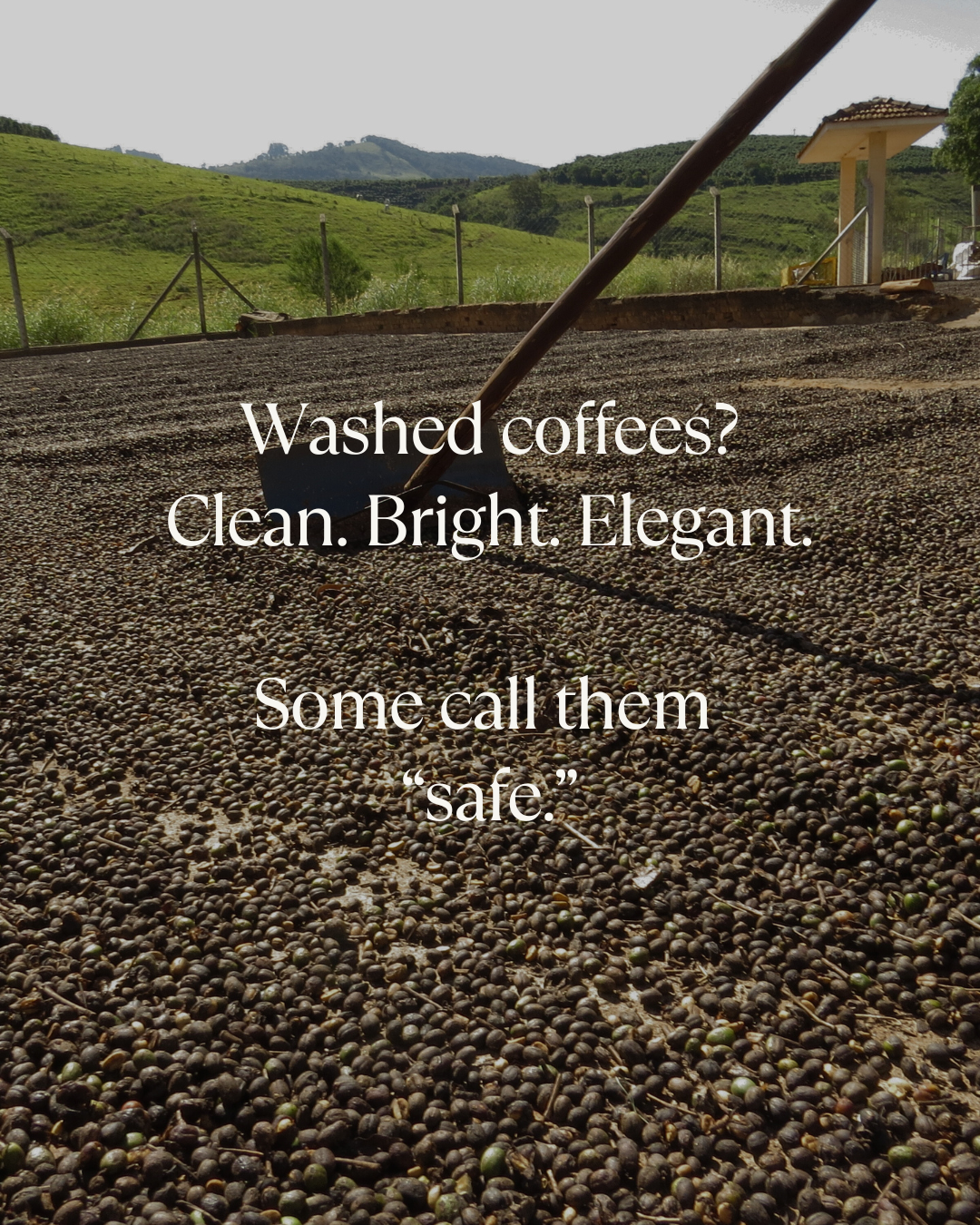
In the washed process, the fruit is usually removed early, and the beans are typically fermented in water to help break down and rinse off the sticky mucilage.
But here’s the modern twist: not all washed coffee goes through the classic long water soak anymore some producers use mechanical demucilagers or short “dry” fermentations to speed things up while still achieving that clean, crisp washed profile.
→ Results: clean, crisp, tea-like flavor clarity.
Think of it like a freshly pressed white shirt: minimal, pure and bright. This is why washed coffee is known for transparency: subtle notes like floral, citrus or stone fruit have room to shine through without being overshadowed by fruitiness or sweetness you might find in naturals or honeys.
In the cup: expect (usually) a lighter, vibrant body, crisp acidity, and a clean finish. With the wet process, coffee’s personality tends to show up clear, elegant, and easy to appreciate.
Natural (a.k.a. Dry Process)
Coming from a family of third-generation coffee farmers, I’ve always been fascinated by naturals this process takes me straight back to my hometown.
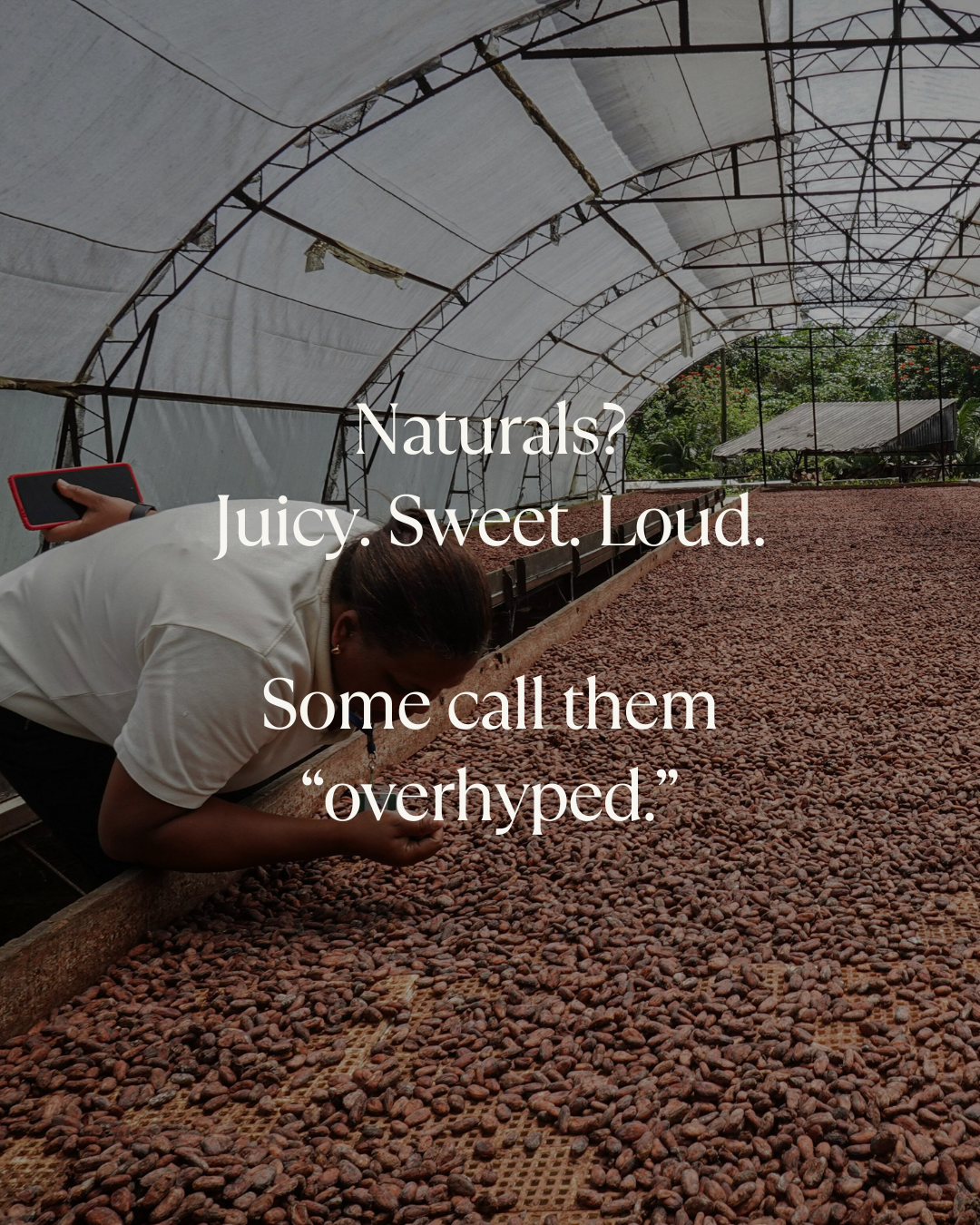
In the natural process, the whole cherry dries around the bean. As it slowly dehydrates, the sugars and fruit compounds interact with the seed, often creating a fruit-forward cup that many people associate with berries, winey notes and jammy sweetness.
But here’s the reality: not all naturals are the rustic, sub-dried versions of the past. Some producers now use controlled raised bed drying, shade management, mechanical dryers or stage by stage natural processing to improve consistency and reduce defects. Others blend brief fermentation steps with drying still considered “natural”, but more refined than the fully wild, traditional method.
In the cup: Bold, juicy, and delightfully unpredictable. Imagine slow-roasting fruit in its own syrup: some bursts of berry here, a hint of tropical fruit there, all wrapped in a naturally rich body. Natural coffees are for the adventurous sipper intense, sometimes a little wild, but that’s the charm. It’s like tasting the sun, soil, and patience of the farm all in one cup.
Pro tip: because the fruit stays on the bean, drying conditions are key. Too fast, and the flavors can taste flat or over-fermented; too slow, and you risk sticky, overly sweet notes. When done right, it’s a vivid, fruity, and unforgettable cup that’s the opposite of “safe” coffee.
Honey Process
A middle ground. Some of the mucilage is left on during drying.
Think of it like caramelizing sugar until it’s just right sweet, warm, and inviting, but still bright enough to dance on your palate. Or, even better, like a slow sun-kissed jam on your morning toast sweet, sticky, but not overpowering. The more mucilage left on, the deeper the sweetness and body, almost syrupy, while less mucilage keeps it closer to a clean, crisp cup.
Honey processing comes in different “colors” — white, yellow, red, and black depending on how much mucilage is left and how long it dries. White honey is lighter and more delicate, while black honey is dense, sweet, and rich with complex fruity notes.
It’s a delicate balancing act for farmers: the goal is sweetness and complexity without tipping into over-fermented or sticky flavors. patience, attention, and a little luck with the weather make all the difference.
In the cup: expect honeyed sweetness, medium body, gentle fruitiness, and subtle acidity essentially a little bridge between clean and fruity, a crowd-pleaser for those who want a sweet, approachable coffee without going over the top.
Anaerobic (Sealed-Tank) Fermentation
Here’s where things get experimental. Whole cherries or beans are sealed in tanks with little to no oxygen, forcing the microbes to “breathe differently.” This unusual environment can amplify or shift the balance of certain by-products, lactic acids, esters, and complex aromatics that you don’t get in traditional fermentation.
Modern variations include short vs. long anaerobic cycles, different tank materials, and temperature-controlled environments; each tweak nudges flavor in its own creative direction.
Think of it like a chef experimenting in a vacuum-sealed sous-vide precision, patience, and creativity all in play. Careful monitoring can turn curiosity into magic in your cup.
In the cup: Funky, bold, layered, and sometimes delightfully unpredictable. Imagine a berry-forward note swirling into a subtle tang of yogurt, finishing with a whisper of tropical fruit and chocolate familiar yet surprising, structured yet playful. Each tank becomes a tiny flavor laboratory, where curiosity meets precision.
As I write this, I’m sipping a double Anaerobic Colombian from FLTR candied violet, lychee, and a silky-smooth mouthfeel. It’s the kind of coffee that reminds me why fermentation isn’t just science; it’s magic in a mug.
Carbonic Maceration (The Wine-Maker’s Trick)
Carbonic maceration is borrowed straight from Beaujolais winemaking. Whole coffee cherries are sealed in CO₂ rich tanks. The beans essentially marinate in their own sugars and aromas, developing flavors that are juicy, aromatic, and often quite experimental.
In the cup: a sip of coffee where strawberry and tropical fruit dance with floral notes, finishing with a silky, almost wine-like body. It’s vibrant, juicy, and a little daring a coffee adventure in every cup.
A quick note before we go sci-fi:
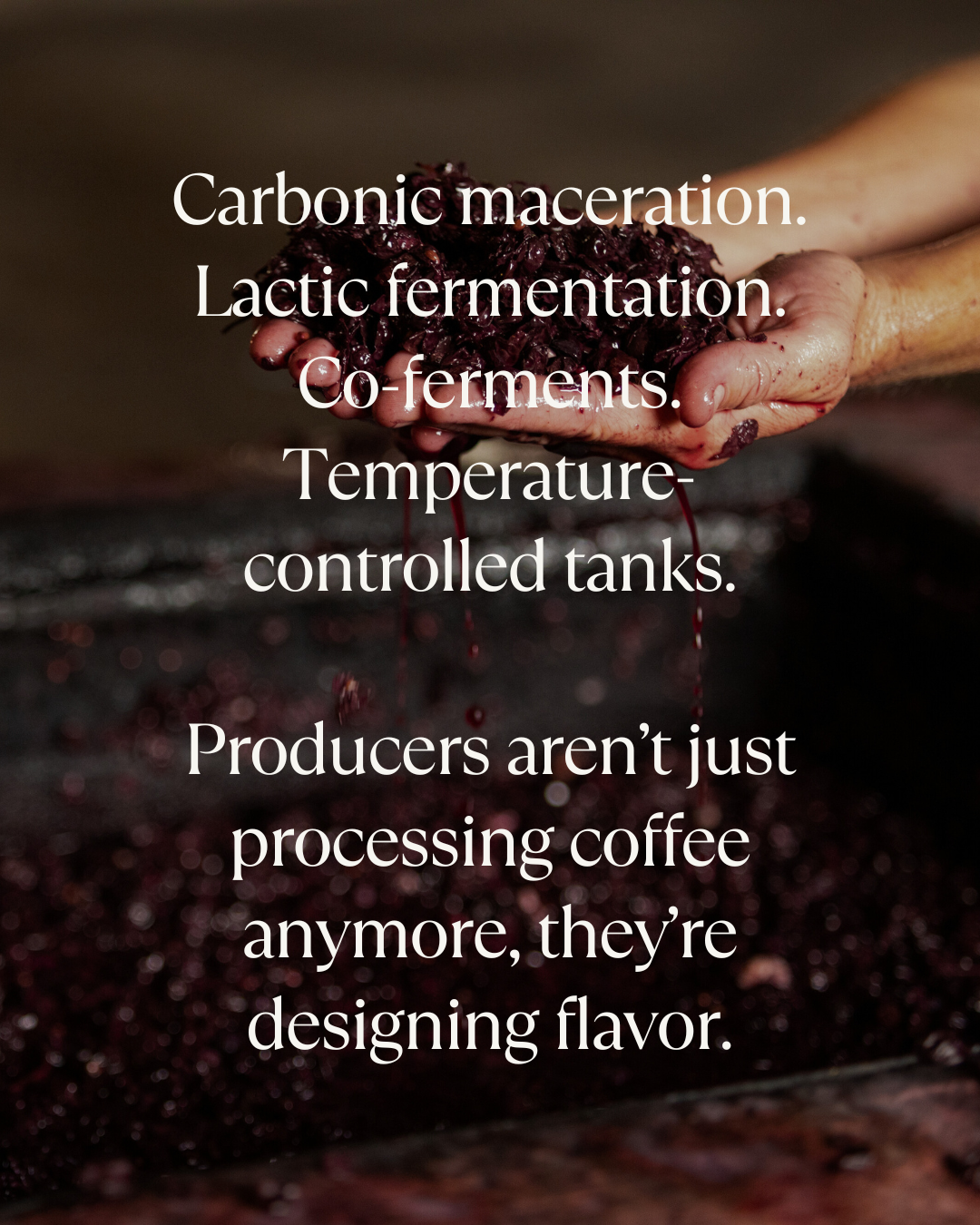
“Controlled fermentation” isn’t its own method, it’s the way modern producers guide microbes by managing things like temperature, oxygen, and time. It’s the backbone behind all the experimental processes you’re about to see, turning fermentation from chance into craft.
The Wild, Weird & Wonderful World of Modern Fermentation
(a.k.a. “Everything your barista wants to tell you but doesn’t have time for”)
Because the coffee world didn’t stop at washed, natural, honey, and anaerobic. Here are the methods you’ve probably seen on labels but never really understood:
Co-Fermentation (When Flavors Team Up)
Co-fermentation is like throwing a microparty in the fermentation tank. Microbes metabolize sugars from both coffee and added ingredients such as fruit pulp, cacao mucilage, or botanicals, influencing the resulting flavor compounds. Each added ingredient leaves a signature: tropical fruits bring brightness, cacao deepens chocolatey notes, and spices or botanicals add subtle intrigue.
In the cup: expect layered, expressive coffee juicy, floral, sometimes lightly candy-like or gently spicy where every sip feels like a harmonious collaboration rather than a single-note performance. It’s coffee experimenting, but in a controlled way.
Lactic Fermentation (The Yogurt Trick)
Lactic fermentation is, your coffee cherries take a slow spa day, emerging smoother, sweeter, and more refined.
Producers seal pulped cherries in tanks without oxygen (not all the time), and let lactic-acid bacteria (Lactobacillus cultures) take over provided the temperature and pH is right. These bacteria munch on the sugars and turn them into lactic acid, creating a super smooth, velvety body.
In the cup: expect a rich, creamy texture, sweeter notes, and floral or fruity overtones. High lactic acid gives it a soft, mellow tang sometimes like pineapple yogurt or papaya. When done right, this process doesn’t just taste experimental it feels luxurious.
Inoculated Fermentation (Microbes… on Purpose)
Inoculated coffee is what happens when farmers don’t leave fermentation up to wild chance, instead of relying on random natural microbes, farmers pick specific yeast or bacterial strains to guide flavor.
Like inviting a skilled chef into the kitchen to season the dish just right. These chosen yeasts help shape the fermentation more predictably, boosting sweetness, polishing acidity, and lifting fruity or floral notes without overwhelming the coffee’s natural character.
In the cup: expect cleaner, brighter fruit, smoother texture, and a gentle pop of aromatics sometimes a soft wine-like lift or a juicy ester note. It’s still the same coffee, just with its best qualities turned up a notch.
Koji Fermentation (Yes… Like Sake & Miso)
Koji coffee is basically Japan’s secret fermentation superpower crashing the specialty scene. Koji fungi (Aspergillus oryzae) help break down the mucilage in unique ways.
It’s the same fungus that makes miso, sake, and soy sauce feel so umami-rich. Instead of hijacking the flavor, it enhances what’s already there: more sweetness, more aromatic lift, a rounder, silkier body. It’s pricey, sensitive, and hard to scale, so it mostly appears in competitions and experimental microlots, but the results? Risky but worth it.
In the cup: deep umami sweetness, complex aromatics.
A Japanese master gardener at work coaxing out deeper sweetness and hidden aromatics without ever overshadowing the bean’s own character.
Thermal Play Fermentation: Where Science & Art Collide
Here’s where coffee fermentation gets even more interesting: temperature control isn’t just a background setting it’s a flavor lever. Recent research backs up what adventurous producers have suspected: messing with the heat can steer how microbes behave, and that steers how your cup ends up.
Take the 2023 bioreactor study from Cenicafé: fermentations held at 15 °C vs. 30 °C showed that cooler temperatures sparked more activity from lactic acid bacteria and yeasts. The result? Higher SCA scores, especially for high-altitude beans. In short, controlling temperature doesn’t just speed up or slow down fermentation it channels microbial activity to craft more nuanced flavors.
Then there’s a 2024 metagenomics + metabolomics study in a humid, subtropical region. Researchers tracked microbial communities like Enterobacter and Kluyvera and mapped the esters, alcohols, and acids they produced. The takeaway: even small environmental “stressors” like temperature shifts can trigger microbial alchemy, creating compounds that directly impact aroma, acidity, and sweetness.
Even in anaerobic (sealed-tank) fermentation, temperature makes a huge difference. A 2023 study in Taiwan compared fermentation at 4 °C vs. 37 °C (PMC). Lower temps favored Leuconostoc and Gluconobacter, while higher temps encouraged Acetobacter. Different microbes, different chemistry, different flavors in the cup.
In the cup: expect heightened aromatics, crisp fruit notes, and sometimes bursts of floral complexity. Think of it like sending the microbes on a rollercoaster of hot and cold: they adapt, react, and produce flavors you simply wouldn’t get from a steady, even fermentation.
So what does this mean for coffee folks?
If you're a producer: dialing in temperature isn’t just for stability it’s a creative tool.
If you’re a roaster or barista: knowing a lot about how that coffee was fermented (and at what temperature) gives you more storytelling power and maybe helps predict what flavor notes will pop.
For the coffee fans: it's proof that “thermal shock” or “temperature-play” isn’t just hype, there’s real science behind it.
What Fermentation Does to Flavor
Here’s the real magic fermentation shapes your coffee’s entire vibe:
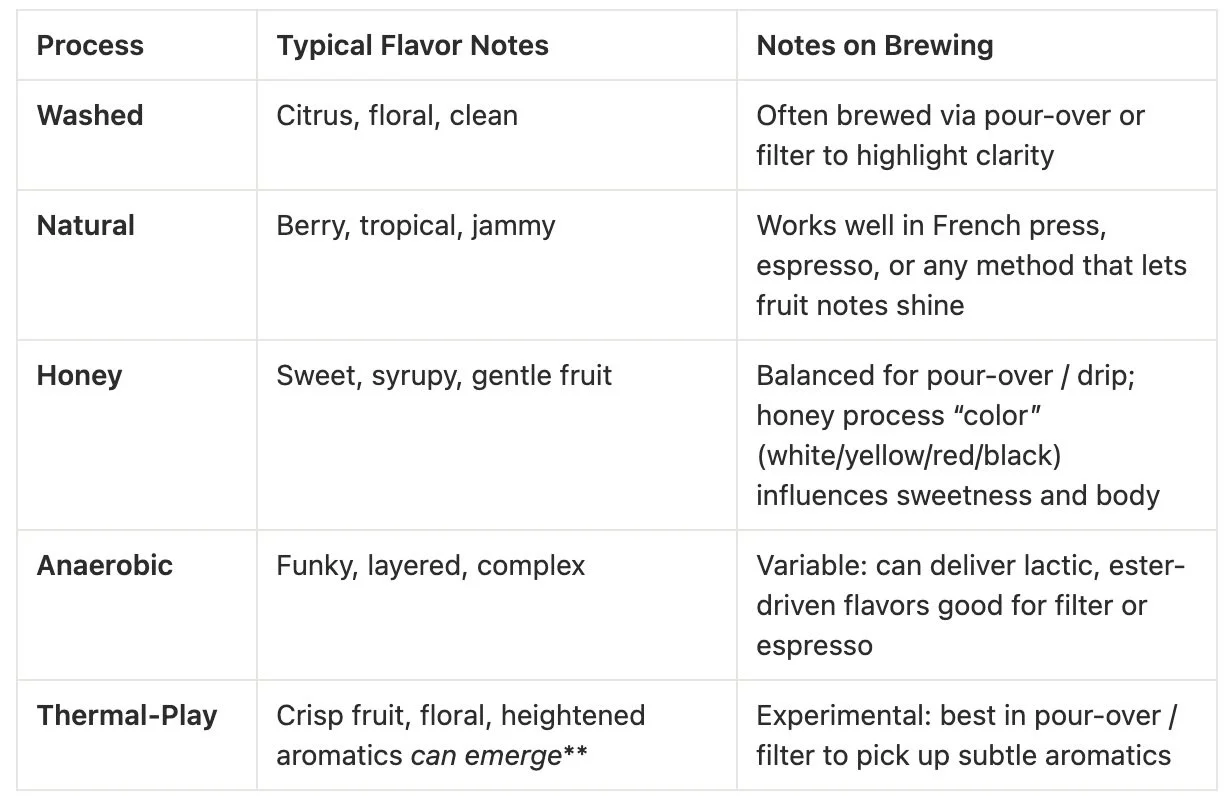
*These “Thermal-Play” flavor notes are emerging from early and controlled scientific studies, not yet universally guaranteed for every batch.
**Actual flavor outcome depends heavily on fermentation conditions (temperature, time, oxygen, etc.).

Fermentation isn’t just a step between picking and roasting it’s the heartbeat of coffee’s flavor.
Every decision be it oxygen level, microbe type, fruit contact, or time, shapes how your cup tastes.
So, the next time you see “anaerobic natural” or “carbonic maceration” on your bag, you’ll know it’s not just fancy coffee marketing. It’s a mix of science, craft, and nature’s wild side, all collaborating to make that sip unforgettable.
The more time I spend tasting different types of coffee, the clearer it becomes: fermentation is one of the most powerful tools in coffee. What looks like a small processing tweak on the farm can completely reshape the final profile in your mug.
I’m curious, what’s the most unforgettable coffee you’ve tasted, and do you know how it was processed washed, natural, honey, anaerobic, or carbonic maceration? Drop your experience in the comments and help fellow coffee lovers discover their next favorite cup.