How to Tell If Your Matcha Is Actually Ceremonial-Grade (And Why Most Isn't)

Recently, I attended a matcha training session hosted by Aiya Matcha at Mokha 1450 and if you work in specialty coffee or F&B, this is the kind of session that actually changes how you look at an ingredient.
Matcha has been surging across café menus and specialty beverage programs for a while now. But the session wasn’t about trends. It focused on something that consistently gets overlooked in the rush to add matcha to the menu: how to actually identify authentic ceremonial-grade matcha, and why getting that right matters more than most buyers realize.
As demand grows, the gap between real ceremonial matcha and lower-quality imitations is widening and so is the cost of getting it wrong. Sourcing the right matcha isn’t just about flavor. It’s about delivering consistent quality that keeps customers coming back, and being able to stand behind what you serve.
Before we get into what makes high-quality matcha, one thing worth knowing: “ceremonial grade” is not an officially regulated or standardized term. It has no standardized definition and no certifying body behind it. It emerged as a marketing label as matcha grew in popularity outside Japan and today it gets applied loosely, often to products that don’t deserve it.
The real indicators of quality have nothing to do with the label on the bag. They come down to cultivation, processing, grinding, and how the product was handled before it reached you. That’s what we’re actually evaluating here.
What Makes Ceremonial-Grade Matcha Special?
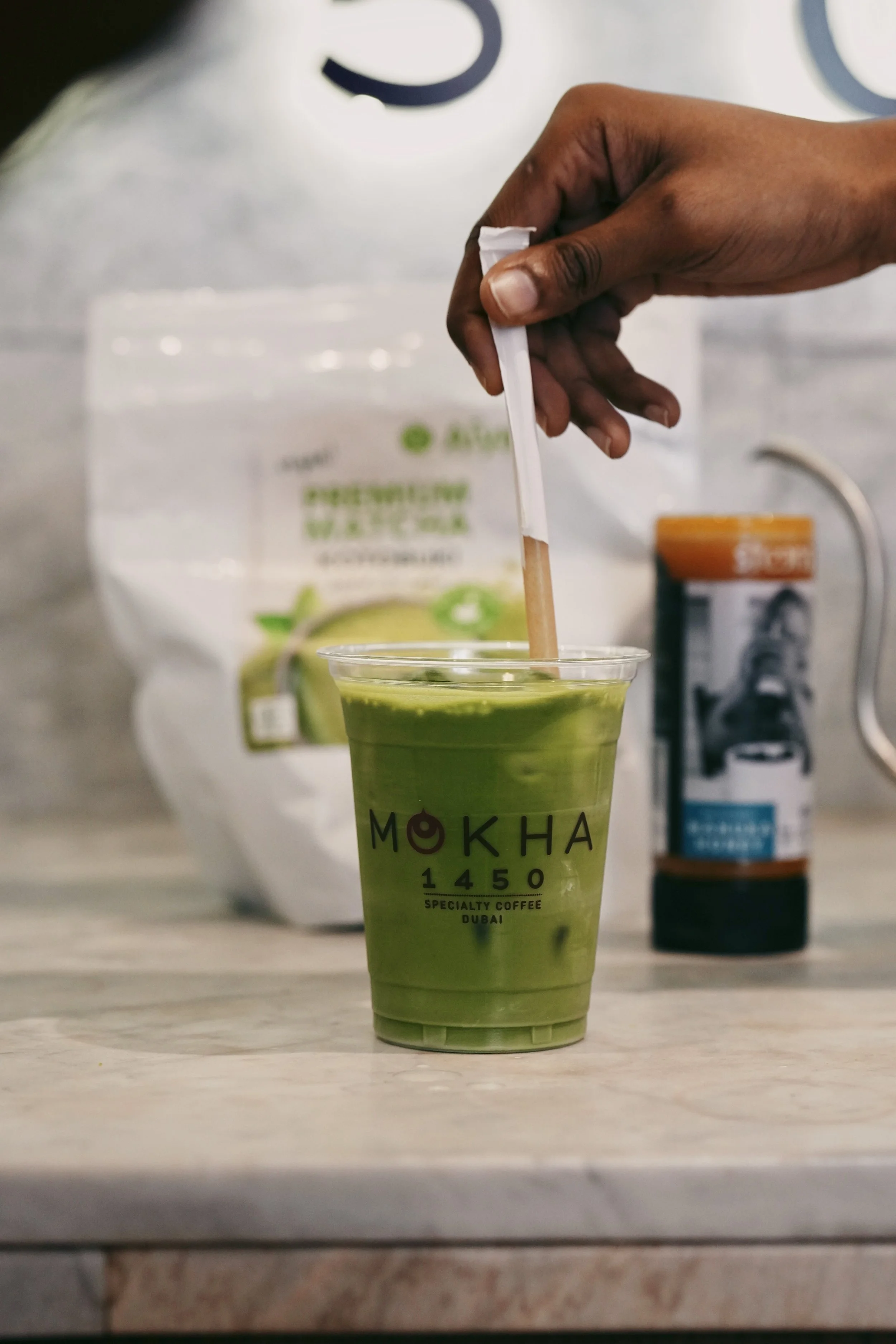
Ceremonial-grade matcha sits at the top of the quality hierarchy. Unlike culinary-grade, it’s produced exclusively from young tencha leaves. This is the raw material that delivers the vibrant green color, silky texture, and umami-rich taste that separates real matcha from everything else.
The training broke the production process down into stages that are worth understanding before you ever place an order.
Shading and Harvesting
Tea plants are shaded for several weeks before harvest typically 20 to 30 days. This deliberate light restriction triggers a biological response: chlorophyll and L-theanine levels spike, producing the deep green color and signature umami sweetness that defines quality matcha. Without proper shading, you simply cannot replicate this flavor profile, regardless of processing.
Processing and Grinding
After harvest, the leaves are steamed, dried, and processed into tencha. A crucial stage where stems and veins are carefully removed. The remaining leaf material is then slowly ground using traditional granite or ceramic stone mills to produce an ultra-fine powder between 1 and 5 microns in particle size. That level of fineness is what gives ceremonial matcha its characteristic silky mouthfeel. It’s not achievable through industrial grinding methods.
Cold Chain Storage
This is the one that catches buyers off guard most often: temperature control. High-quality matcha is extremely sensitive to oxygen, heat, moisture, and light. It must remain refrigerated throughout storage and transport to preserve its flavor, color, and freshness. A matcha that survives weeks in a warm warehouse or shipping container without visible change was probably already oxidised before it left Japan.
How to Spot Fake or Low-Quality Matcha

One of the most useful parts of the training was the sensory evaluation. Learning to identify matcha quality through simple, practical checks that anyone can do before purchasing or serving.
These are the indicators I now use every time.
Color
Authentic ceremonial matcha has a deep, vibrant green almost luminescent when fresh. Pale, yellow-green, or dull powders typically indicate older leaves, lower-grade raw material, or improper storage. Color is one of your first and most reliable signals.
Residue in the Cup
Whisk high-quality matcha and it should dissolve smoothly within 20 seconds. If significant residue settles at the bottom, that’s a reliable indicator of poor grinding, non-tencha leaves, or both.
Flavor Balance
Real ceremonial matcha should taste naturally sweet with umami depth, balanced by a gentle, clean bitterness. Harsh or lingering bitterness is a flag for low-grade leaves.
A useful test: prepare a simple matcha latte at a 2–3% matcha-to-milk ratio, no syrups, no flavors. If the umami, sweetness, and rich aroma don’t come through cleanly, the base powder isn’t doing its job.
Touch Test
Pinch a small amount between your fingers. Ceremonial-grade matcha should feel silky and almost powdery-smooth. Coarse or gritty texture is a direct sign of lower-quality or insufficient grinding.
Paper Test
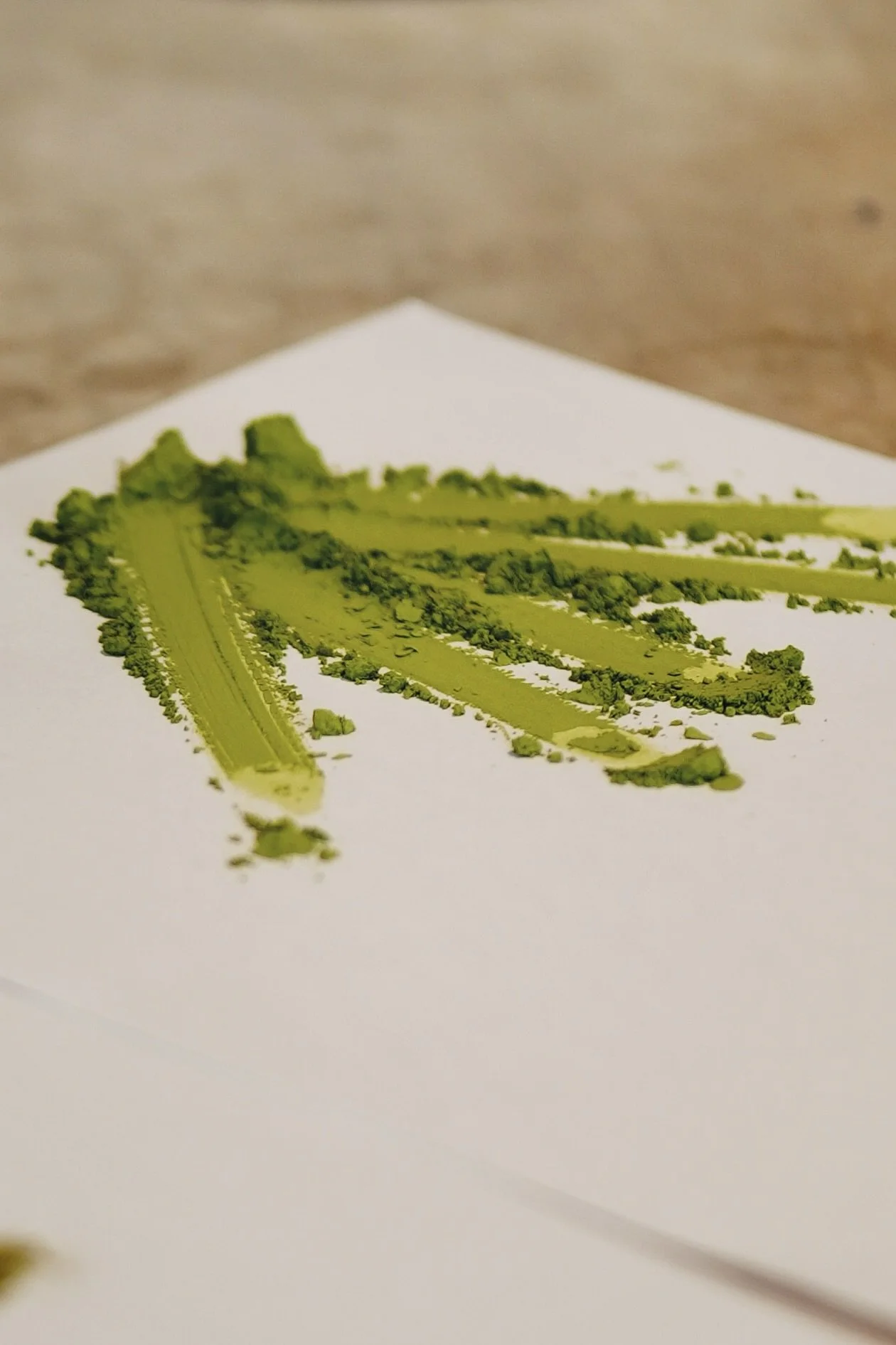
Drag a small amount across white paper. Quality matcha leaves a smooth, even green streak. Clumps, specks, or uneven distribution point toward inferior raw material or processing.
Matcha vs. Green Tea — They’re Not the Same Thing
This distinction matters, especially as more products get labeled “matcha” when they’re really just green tea powder.
Matcha and green tea share the same plant knows as Camellia sinensis but the similarities stop there. The cultivation, processing, standards, and sensory experience are fundamentally different at every level.
The defining characteristic of genuine matcha is umami. It is a deep, savory-sweet sensation driven by L-theanine and glutamic acid, two compounds that dissolve even at low temperatures. Green tea doesn’t deliver this in the same way.
Beyond umami, quality matcha presents a layered sensory profile: rich aroma, natural sweetness, controlled astringency, and minimal bitterness. The astringency in matcha (driven by polyphenols binding to proteins in saliva) is measurably different in character and far less aggressive in intensity compared to standard green tea.
The exceptional L-theanine content in ceremonial-grade matcha also contributes to natural sweetness and delivers a calm, focused energy. No jitters, no crash. That’s the caffeine-L-theanine combination working together, and it’s a functional benefit your customers will actually feel and remember.
Contrary to what many people assume, real ceremonial matcha doesn’t taste bitter. If it does, that’s a quality issue, not a matcha characteristic.
Questions to Ask Your Matcha Supplier
Before you source matcha for your café or business, you should be able to get clear answers on all of the following. If a supplier can’t answer these confidently, that’s your answer.
Japanese Agricultural Standard (JAS) Certification
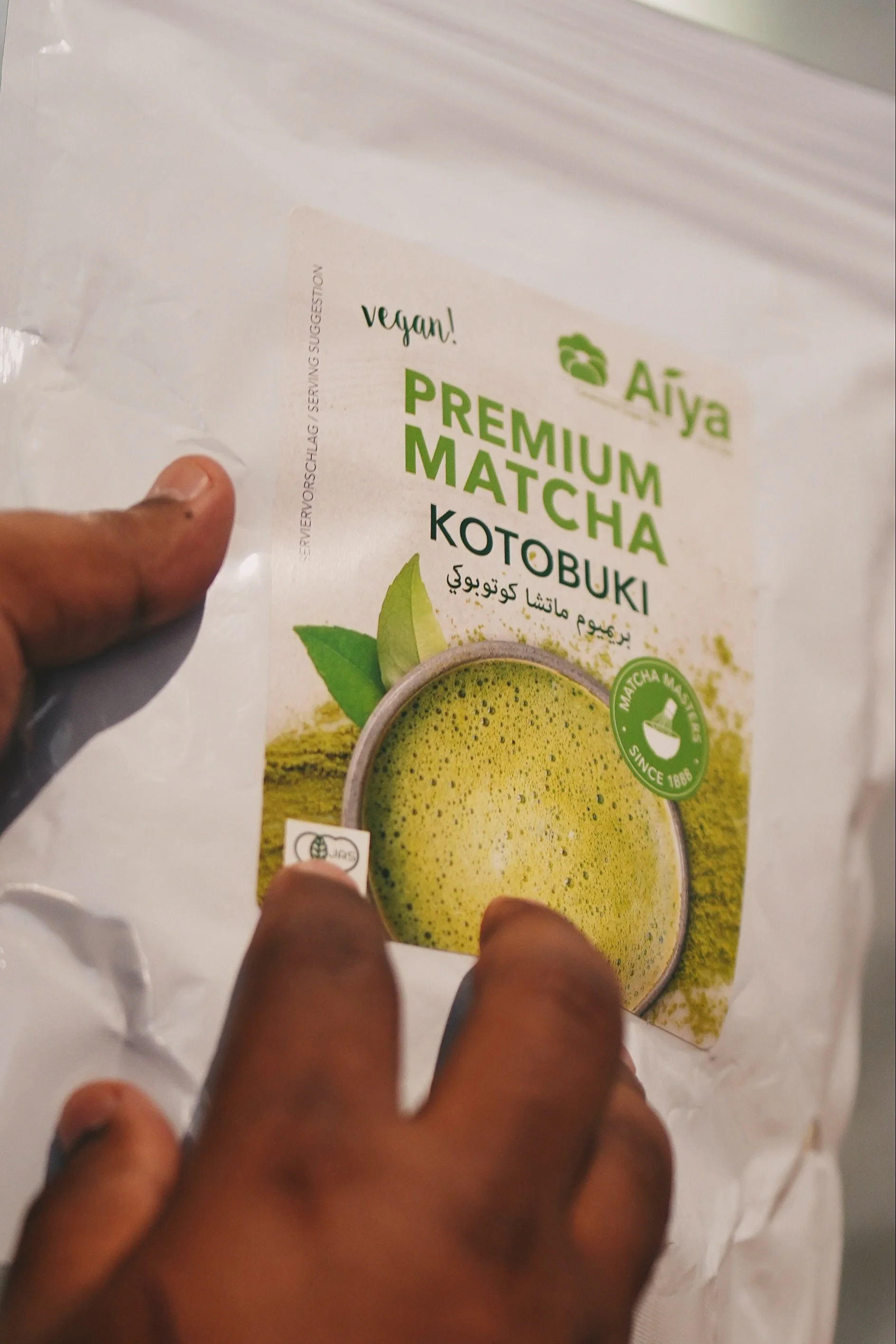
Does the matcha carry the JAS logo? While a JAS logo may appear on many Japanese green teas, a product is not genuine matcha unless it also meets the full set of cultivation, processing, and quality verifications specific to ceremonial-grade matcha. JAS is a starting point, not the full picture.
Cold Chain Logistics
Was the matcha transported and stored in refrigerated conditions from Japan to its final destination? Ask for documentation. A reputable supplier should have a traceable cold chain record.
Pesticide and Heavy Metal Testing
Reputable suppliers provide laboratory reports confirming the absence of pesticides and heavy metals. If they can’t produce recent lab data, that’s a red flag. Real matcha quality is proven on paper, not on social media.
Stone Grinding
Traditional granite or ceramic stone mills grind carefully selected tencha leaves to an ultra-fine 1–5 micron particle size. This is what creates the smooth, velvety texture and allows the entire leaf to be consumed rather than steeped and discarded. Industrial grinding cannot replicate this.
Nutritional Data
Ask for a detailed nutritional table covering L-theanine content, caffeine levels, total amino acids, and antioxidant capacity (ORAC score). This data lets you compare products on measurable health and performance benefits, justify premium pricing to operators, and communicate accurate information to guests seeking functional beverages.
Country of Origin (COO) Certificate
Does the supplier provide matcha that is both produced and packaged in Japan, with an official Certificate of Origin to prove it? When a café is paying ceremonial-grade prices, they should receive fully vetted, traceable Japanese matcha, not untraceable green tea powder marketed under a different label.
Why the Supply Chain Is Part of the Product
Ceremonial-grade matcha is naturally limited in supply. The production is labor-intensive, highly controlled, and time-sensitive. You can’t scale it without compromising quality.
That limitation is exactly why supply chain integrity matters as much as the product itself. Matcha is extremely sensitive to oxygen, heat, moisture, and light. Without proper cold storage, documented logistics, and rigorous quality audits at every stage, even an excellent batch can degrade before it reaches your espresso machine.
Working with suppliers who treat the supply chain as part of the product is non-negotiable if you’re serious about consistency.
Why This Matters for Your Business
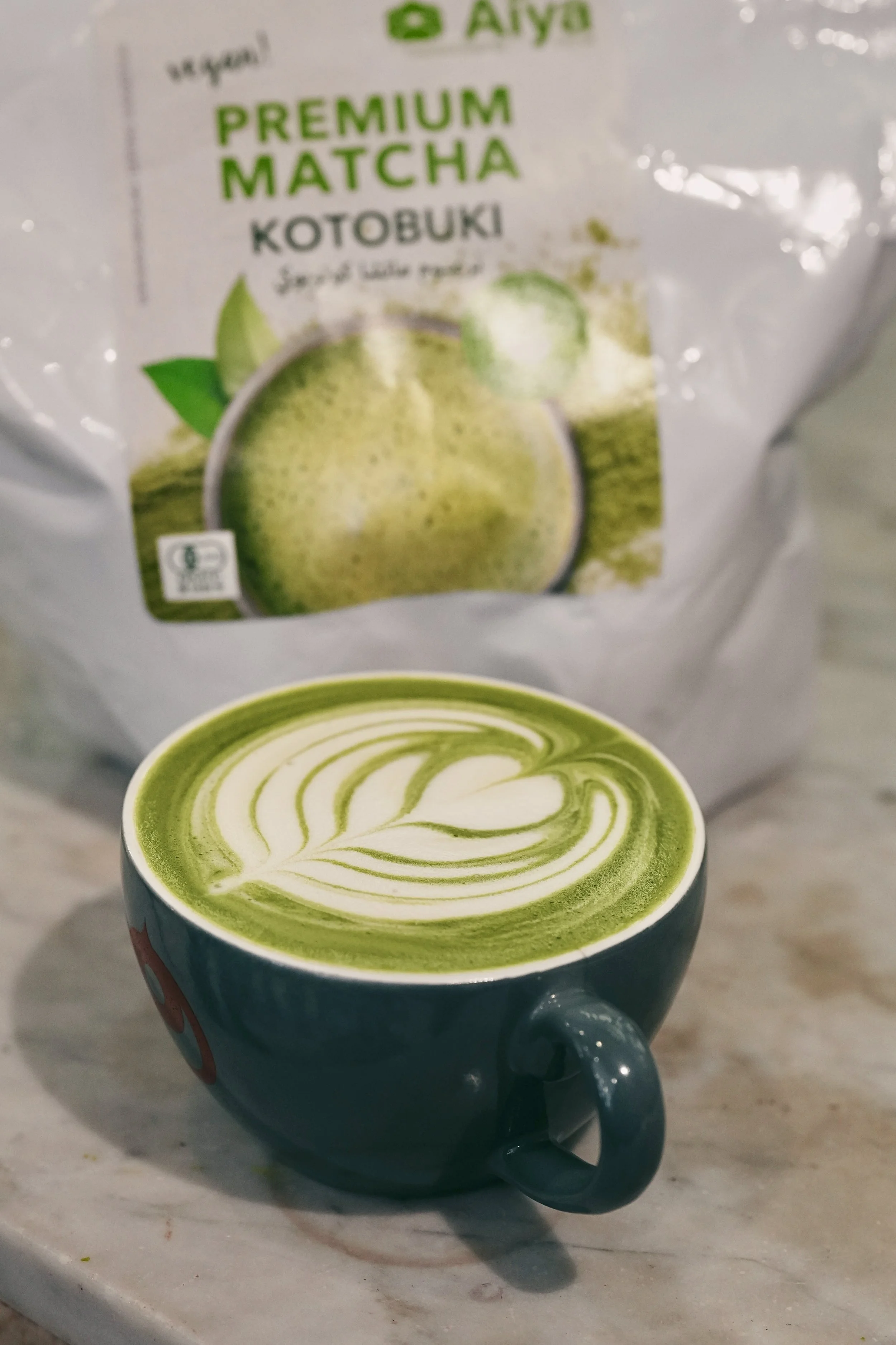
Offering premium matcha isn’t just about adding another drink to the menu. It’s a business decision with a real ROI if you approach it correctly.
When cafés serve authentic, ceremonial-grade matcha grounded in real product knowledge, something measurable happens: customers feel the difference. The calm, focused energy delivered by the caffeine-L-theanine combination is an experience, not just a flavor. It’s the kind of thing that turns first-time visitors into daily regulars and lifts average transaction values on core matcha drinks over time.
That only happens when the base powder is doing its job. And the base powder only does its job when it’s sourced, stored, and prepared correctly.
The payoff goes beyond product performance:
Superior Flavor — Smooth, balanced, naturally sweet. No masking required.
Visual Appeal — Vibrant green color that photographs well and creates drinks customers share.
Customer Trust — Transparent sourcing builds credibility with guests who care about quality and ingredients.
Reality Check: 7 Questions That Separate Real Matcha from the Rest

Use these as a mental checklist the next time you’re evaluating a supplier.
Check #1 — Japanese Matcha or Just Green Tea?
If your supplier can’t produce a Certificate of Origin and a proper spec sheet, you’re probably paying matcha prices for untraceable green tea powder.
Check #2 — The Bottom-of-the-Cup Test
Real ceremonial matcha whisks smooth in under 20 seconds. If your baristas are battling clumps and grit, the issue is almost always non-tencha leaves.
Check #3 — Delivered Cold or Cooked in Transit?
Matcha that survives weeks in a hot container without changing was likely oxidised before it left Japan. Serious suppliers protect quality with a documented cold chain.
Check #4 — Calm Focus or Sugar Mask?
If the only way your matcha sells is buried in syrups and toppings while plain matcha latte orders stagnate, the base powder isn’t delivering. Real ceremonial matcha sells itself.
Check #5 — Clear Origin or Mystery Powder?
If the packaging won’t clearly state that the matcha was grown, milled, and packaged in Japan, you’re gambling on provenance. The safest bet is matcha that openly declares its Japanese address.
Check #6 — Good Enough to Drink Straight?
Authentic ceremonial matcha tastes balanced with just milk or water. If your supplier won’t encourage that test or the result is harsh and bitter — you’re likely sipping low-grade green tea.
Check #7 — Lab Data or Just Marketing?
If your supplier can’t show recent lab reports for pesticides, heavy metals, and microbiology but has no shortage of buzzwords and content, remember: real matcha quality is proven on paper, not on social media.
Check #8 — Printed Packaging or a Paper Sticker on a Plain Bag?
If your “Japanese matcha” arrives in a generic silver or black bag with nothing but a small printed paper sticker, you’re almost certainly looking at white-label powder with no traceable origin — one that’s likely changed hands multiple times before reaching your bar. Authentic Japanese producers pack their matcha in printed tins or pouches with origin, grade, and batch details clearly visible. When the matcha is real, they want you to know exactly who made it and where it came from.
Why I Recommend Aiya Matcha
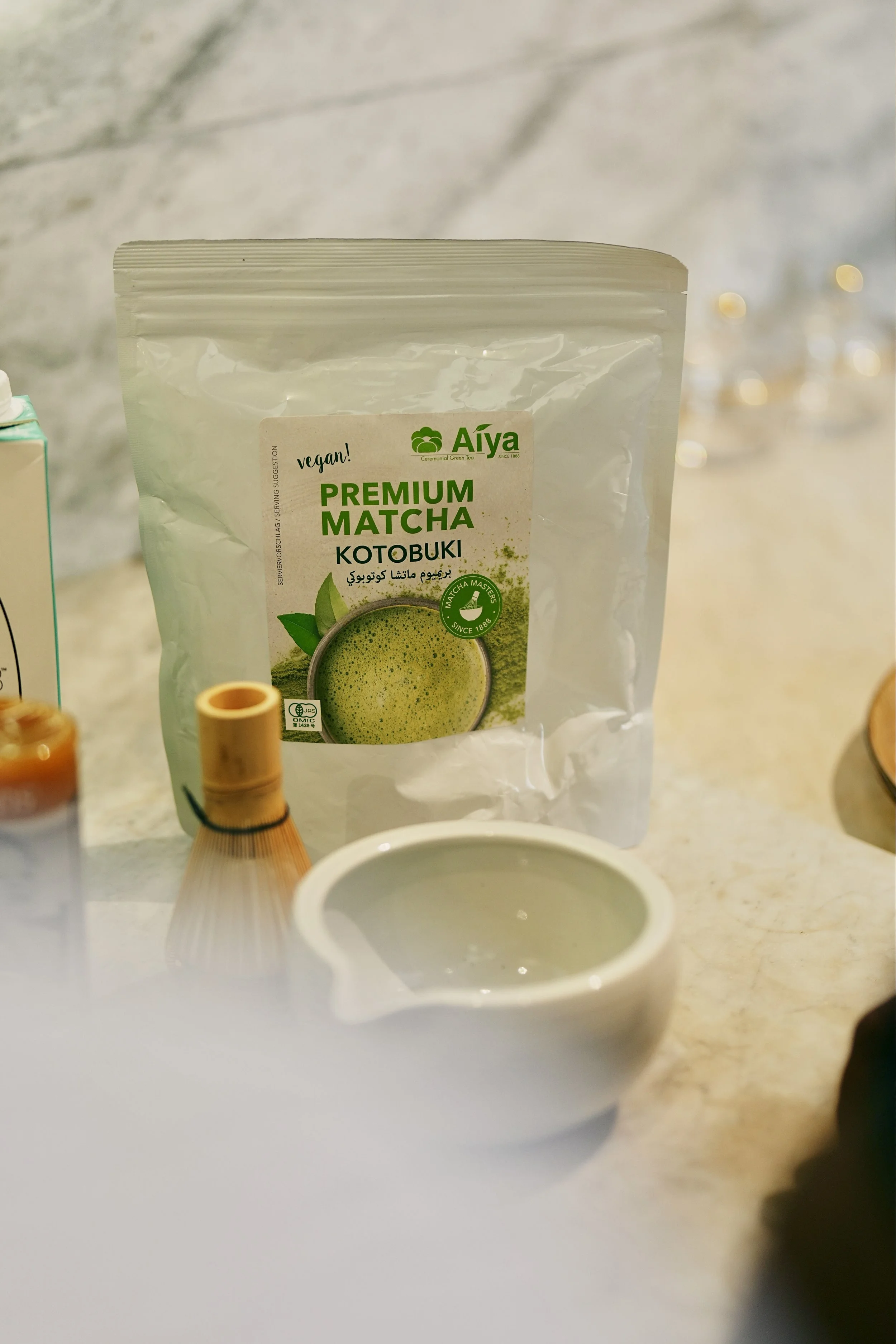
One of the clearest takeaways from the session was understanding why Aiya Matcha has the reputation it does.
Founded in 1888, Aiya has built its entire operation around traditional cultivation, stone grinding, and strict quality control from field to final packaging. They’re not just a supplier — they’re a company that treats matcha production as a craft with standards that haven’t been compromised for the sake of volume.
From shading the tea fields to maintaining documented cold chain logistics, every stage is designed to preserve what makes ceremonial-grade matcha worth the premium.
A note worth keeping: “Ceremonial grade” is a marketing term, not a regulated standard. No official body certifies matcha as ceremonial grade. The quality tests and sourcing checks in this article reflect the actual indicators of high-quality matcha, independent of how it’s labeled.
The biggest takeaway from this session isn’t a checklist. It’s a mindset shift.
Choosing authentic ceremonial-grade matcha is about understanding the craft, the supply chain, and the standards behind the powder and being able to communicate that clearly to the people you serve.
When those elements come together, matcha stops being just another trend on the menu. It becomes something worth talking about.
Tried the paper test or the cup residue test on your current matcha? I'd genuinely like to know what you found. Drop a comment below or find me the conversation on Instagram.